
Why the Delhi High Court and Supreme Court are two different worlds
Imagine walking into the Supreme Court with the same thick file of witness statements and property maps that worked at the Delhi High Court, only to have your case dismissed in ninety seconds. It happens more often than you’d think. Most litigants view the apex court as a ‘third appeal’,a place to fix a bad outcome by re-arguing who said what in 2018. But the reality is a cold shower: the Supreme Court isn’t here to correct every mistake; it’s here to interpret the law.
the fallacy of the third appeal
If you treat your Special Leave Petition (SLP) like a rerun of your High Court trial, you’re likely headed for the 90%+ dismissal pile. The Delhi High Court appeal is where facts still breathe. There, you can argue about the weight of evidence or a judge’s misinterpretation of a specific document. But once you cross into the Supreme Court, the ‘storytelling’ phase is over.
The Supreme Court operates on a discretionary plane under Article 136. It doesn’t care if the High Court was slightly ‘wrong’ on the facts; it cares if there’s a ‘substantial question of law’ that affects the public at large. This is why hiring a Delhi High Court lawyer alone often isn’t enough when moving to the highest level. You need a specialized Supreme Court advocate in Delhi who understands that the registry and the bench demand legal surgery, not a narrative summary.
And then there’s the Advocate-on-Record (AOR) system. Unlike the High Court, where any licensed professional can file a petition, the Supreme Court mandates a specific gatekeeper. Without an AOR, your case doesn’t even exist in the eyes of the court. It’s a completely different procedural world where missing a 90-day deadline or a formatting error leads to immediate rejection. Honestly, the shift in mindset required is often the biggest hurdle for clients to clear.
Q: Can my current Delhi High Court lawyer file my Supreme Court appeal?
The short answer is no,at least not in the way most litigants expect. While you might have spent years working with your Delhi High Court lawyer, the Supreme Court of India operates under a strict gatekeeping mechanism known as the Advocate-on-Record (AOR) system. Under Order IV of the Supreme Court Rules, 2013, only an AOR is legally authorized to file a Vakalatnama, act for a party, or even interact with the court’s registry.
the gatekeeper role: what is an AOR?
Think of an AOR as a specialized procedural architect. To earn this title, an advocate in supreme court new delhi must have at least five years of standing, complete a year of training under a senior AOR, and pass a rigorous examination. They’re also required to maintain a registered office within 16 kilometers of the Supreme Court. This isn’t just red tape; it’s a way to ensure the court has a direct line of accountability for every filing.
While your current counsel can certainly appear and argue, the question of does your current delhi high court lawyer have the right to argue in the supreme court is nuanced. They can plead, but they cannot file the paperwork. This is why why hiring a delhi high court lawyer differs from supreme court representation,the procedural skill sets are entirely different.
factual storytelling vs. legal surgery
In the High Court, your lawyer likely focused on the “story”,who did what, which evidence was ignored, and the personal stakes involved. But the Supreme Court is not a “third appeal” court. It’s a constitutional court. A successful special leave petition india requires stripping away the emotion and identifying a “substantial question of law.”
If your high court lawyers delhi simply repeat their previous arguments, the case will likely be dismissed in minutes. In fact, nearly 90% of SLPs fail because they lack this technical pivot. Understanding which legal expertise handles the shift from delhi high court to a supreme court slp is often the difference between getting a hearing and a summary dismissal.
managing the transition
Many clients worry that do legal costs double when moving from delhi high court to the supreme court. While there are additional fees for an AOR, the real risk is the cost of error. At the office of Shashi Kiran Advocate, we’ve seen how stop overpaying for legal errors how to vet a delhi high court lawyer often involves ensuring they have a collaborative relationship with a seasoned AOR.
Before you move forward, ask about the essential steps to find the right supreme court advocate in delhi for your 2025 litigation. You don’t necessarily have to fire your current lawyer, but you do need an AOR who knows how to navigate the supreme court advocate landscape. Often, the best results come when the High Court lawyer provides the factual foundation while the AOR performs the legal surgery. For a consultation on your specific matter, you can reach out today.
The pivot from storytelling to legal surgery

If you walk into the Supreme Court of India trying to prove that a witness lied or a document was forged, you’ve already lost. That’s storytelling. By the time a case leaves the trial or appellate court procedure India, the window for debating facts has slammed shut. The High Court listens to your narrative; the Supreme Court only cares about the ‘substantial question of law.’ It’s the difference between a general practitioner diagnosing a cough and a surgeon removing a specific tumor.
Most litigants treat an appeal like a second chance to tell their story better. It isn’t. The Supreme Court doesn’t exist to correct every mistake made by a lower bench. It exists to clarify the law for the entire country. This is exactly why the best Delhi High Court arguments often fail in the Supreme Court,they focus on the ‘what’ instead of the ‘why’ of the legal error.
framing the substantial question
To survive the admission stage, your legal counsel New Delhi must extract a single, piercing legal issue from thousands of pages of evidence. Is there a conflict between two High Court judgments? Has a fundamental right been misinterpreted? If you can’t articulate this, your Special Leave Petition (SLP) joins the 90% that are dismissed instantly. Understanding the High Court and Supreme Court difference is vital before filing.
You aren’t asking the judges to feel sorry for you; you’re asking them to fix a broken legal precedent. Choosing a legal expert in Delhi who understands this surgical approach is the only way to avoid summary dismissal. Before you proceed with Delhi High Court litigation, ask yourself: should you move your case from the Delhi High Court to the Supreme Court if the only argument left is a factual one? Usually, the answer is no. Success requires you to secure high-caliber legal representation from a Delhi Supreme Court advocate who prioritizes constitutional rigor. When choosing a top Supreme Court advocate in Delhi for 2026, look for someone who performs legal surgery with precision.
Q: Why are most Special Leave Petitions dismissed within minutes?
Data reveals that between 85% and 96% of Special Leave Petitions (SLPs) are dismissed at the ‘in limine’ stage. This means the case is discarded at the very first hearing, often within two to three minutes of the counsel standing up. To a litigant who has spent months on preparation, this feels like a systemic failure. But from the bench’s perspective, it’s a necessary filter for a court that was never intended to be a third-tier appeal destination.
The primary reason for this high mortality rate is a fundamental misunderstanding of Article 136. Most litigants treat the Supreme Court as a place to re-argue facts. They want to claim a witness was lying or a document was misinterpreted in the lower courts. However, an experienced Supreme Court advocate knows that the court generally accepts the factual findings of the High Court as final. If your petition focuses on ‘he said, she said’ disputes, you’re likely headed for a summary dismissal.
The ‘in limine’ filter and the burden of law
By the time a matter is called, the judges have usually reviewed the brief and the ‘List of Dates’ in their chambers. They aren’t looking for a long-winded narrative; they’re looking for a ‘substantial question of law’ of general public importance. If the counsel can’t identify a constitutional breach or a gross miscarriage of justice within the first sixty seconds, the presiding judge will likely move to the next matter.
I’ve seen clients insist on hiring a lawyer in Delhi who has a reputation for aggressive storytelling, only to watch them get shut down immediately. The court values surgical precision over emotional appeals. This is exactly why the best Delhi High Court arguments often fail in the Supreme Court, as the focus shifts from winning an individual dispute to clarifying the law for the nation.
But even with a solid legal point, procedural errors are often fatal. Missing the 90-day limitation period or filing with technical defects frequently leads to dismissal before the merits are even considered. It’s a high-stakes environment where the margin for error is effectively zero.
Understanding the siloed roles of Senior Advocates and AORs
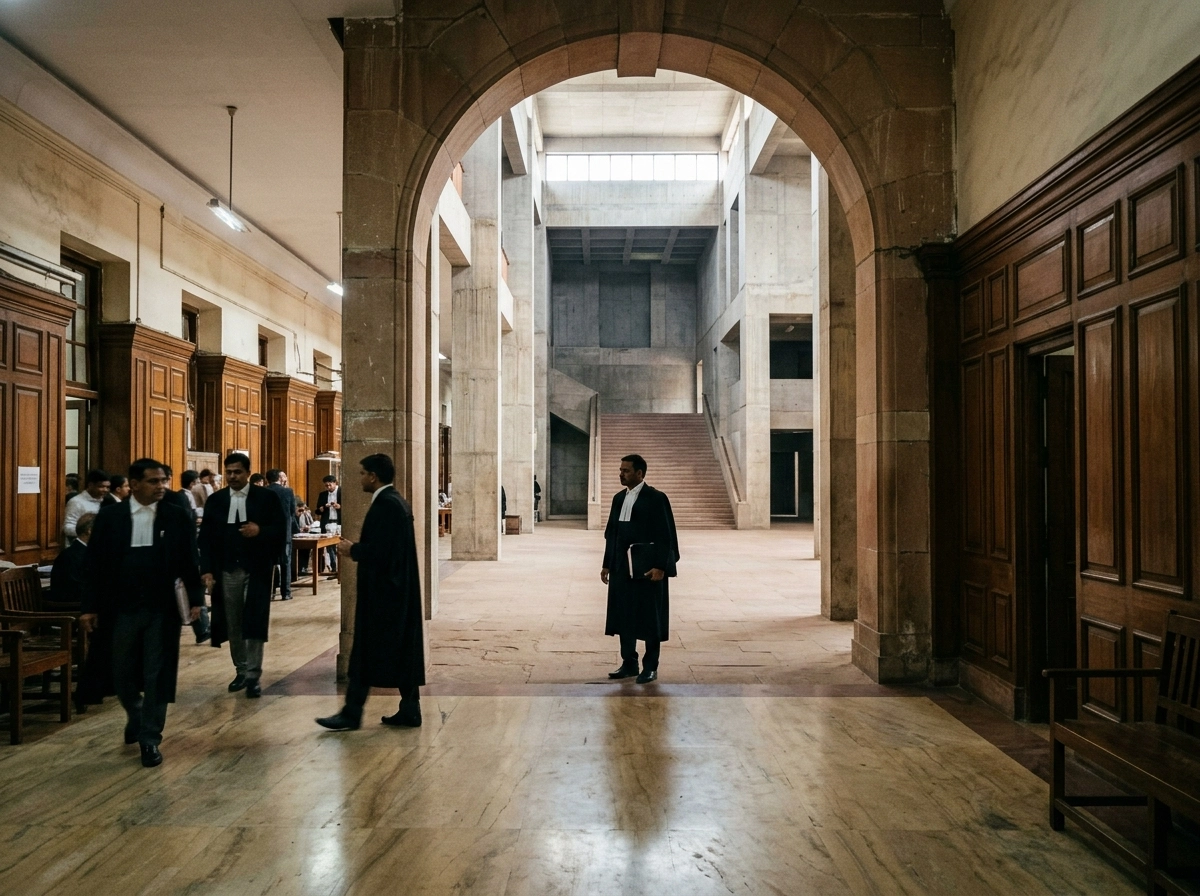
If you’re standing in the Supreme Court corridor, you might see a client try to hand a document to a Senior Advocate, only to be redirected to the person standing right behind them. It isn’t a snub. It’s a hard procedural line. In this world, the Advocate-on-Record (AOR) and the Senior Advocate aren’t just colleagues; they’re two specific parts of a system that grinds to a halt if one is missing.
The gatekeeper and the specialist
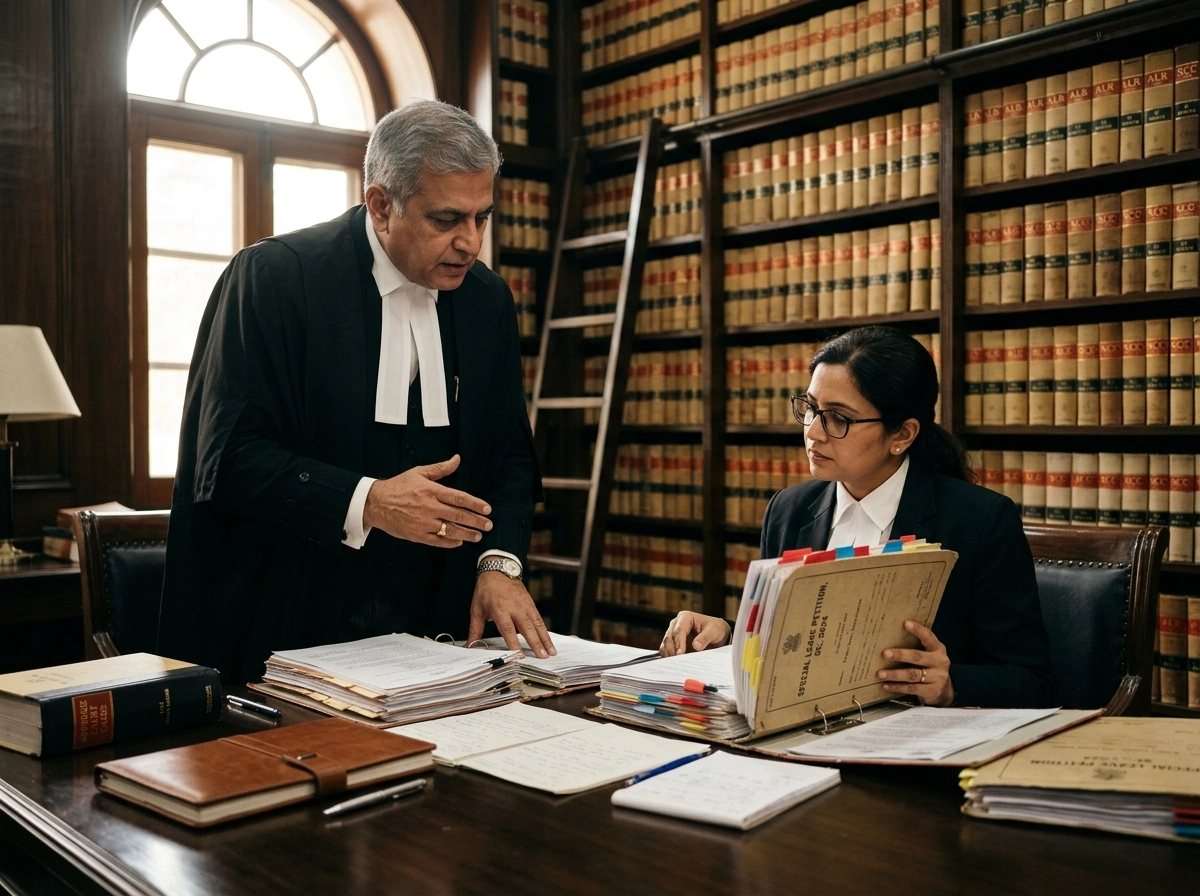
The AOR is the only one the rules allow to actually file a case. They’re the ones who sign the ‘Vakalatnama’ and take legal responsibility for the paperwork. If you need a Supreme Court advocate to get your matter on the list, you start with an AOR. But when it’s time to speak to the judges, a Senior Advocate—the ones in the distinct gowns—usually takes over. They aren’t allowed to file papers or even meet clients for instructions without the AOR there to ‘brief’ them.
People often argue about whether Supreme Court lawyers are more meritorious than those in the High Courts. Honestly, it’s less about who’s ‘better’ and more about who does what. The AOR makes sure the legal foundation is solid, while the Senior Advocate handles the verbal sparring.
Why this tag-team matters
I’ve watched litigants try to skip this hierarchy to save a bit of money, only to find out a Senior Advocate can’t even mention a case to the bench if the AOR isn’t standing there. It’s a mandatory partnership. When you’re looking at how a strategic change for the highest court works, the AOR is the strategist setting the stage. For over 35 years, Advocate Shashi Kiran has worked these halls as an AOR, knowing that while the Senior Advocate might be the closer, the AOR is the anchor. Without that coordination, even a massive High Court win can fall apart under the pressure of the Supreme Court’s strict admission rules.
Q: How do I choose the right expert for each stage?
So, how do you actually pick the person who’ll stand between you and a summary dismissal? It’s tempting to think that the lawyer who won your case at the High Court is the natural choice for the Supreme Court. But that’s a dangerous assumption to make. You’re essentially moving from a trial-focused arena to one that deals strictly in legal theory and constitutional gravity. The skill sets required are as different as those of a general practitioner and a neurosurgeon.
Finding the right fit for the Delhi High Court
When you’re hiring a lawyer in Delhi for a High Court matter, you want a detective. This stage is where the “story” is still being written or refined. Your Delhi High Court lawyer needs to be someone who can master the trial court records, spot a witness inconsistency, or identify a procedural slip-up. They’re dealing with the “what” and the “how.”
Are they responsive? Do they have a track record of handling property or matrimonial disputes in that specific court? That’s what matters here. You need someone who knows the local registry and the specific temperament of the benches. And while expertise is vital, honestly, even the most seasoned counsel can’t always predict how a judge will interpret a specific piece of evidence.
Transitioning to the Supreme Court
But once you move past the Tilak Marg gates, the criteria change. You aren’t looking for a storyteller anymore; you’re looking for a constitutional scholar. This is why many litigants realize that a victory in Delhi High Court might be your biggest risk in the Supreme Court if you aren’t prepared for the shift in strategy.
When seeking legal counsel New Delhi for the apex court, your first check should be their status as an Advocate-on-Record. But don’t just stop there. Ask them: “What is the substantial question of law here?” If they start talking about the facts of the case again, they might not be the right fit for a Special Leave Petition. You need someone like Shashi Kiran, who understands that the Supreme Court isn’t a place for a do-over, but for a precise legal strike. Choosing a specialist who can navigate the AOR system significantly lowers the chance of your case being tossed out in minutes.
The high cost of the ‘High Court mindset’ at the top level

The 90-day limitation period for filing a Special Leave Petition (SLP) is a hard wall, not a suggestion. I’ve seen too many litigants treat this window like a High Court filing, where procedural delays are often met with leniency. In the Supreme Court, that extra week spent “perfecting the facts” usually leads to a summary dismissal before a judge even reads the first page of your argument.
The friction of the 90-day clock
Transitioning from a Delhi High Court Lawyer to the highest level requires shedding the “trial court baggage.” While the High Court is a place for storytelling and evidence, the Supreme Court is a forum for legal surgery. If you’re still arguing over who said what in a 2018 deposition, you’ve already lost. The appellate court procedure India mandates identifying a “substantial question of law,” something most fact-heavy petitions fail to do.
Why the AOR is the gatekeeper
The distinction between senior advocate roles and the Advocate-on-Record (AOR) becomes expensive for the unprepared. You cannot simply walk into the Supreme Court with a great orator and expect a win. You need an AOR like Shashi Kiran Advocate who understands the registry’s rigid formatting and the nuanced difference of Delhi High Court vs Supreme Court litigation.
The reality is brutal: nearly 95% of SLPs are dismissed in limine. This happens because the “High Court mindset” prioritizes emotional grievances over constitutional errors. If your petition reads like a complaint letter rather than a surgical strike on a legal misinterpretation, it’s destined for the bin.
Don’t wait for the 89th day to realize your High Court strategy doesn’t scale. Start the transition to an AOR the moment the High Court order is signed; otherwise, you’re just paying for a very expensive rejection.
If you’re facing a tight 90-day filing deadline, Advocate handles the procedural complexities of the Supreme Court so you don’t get dismissed on a technicality. Call or WhatsApp +91-92121-97427 for a consultation.
People also ask
Can my current Delhi High Court lawyer file my Supreme Court appeal?
Not unless they are also a registered Advocate-on-Record (AOR). The Supreme Court has strict rules where only an AOR can file a Vakalatnama or handle the registry process, so you’ll need to check their credentials first.
Why are most Special Leave Petitions dismissed within minutes?
It’s usually because lawyers try to re-argue the facts of the case rather than focusing on a ‘substantial question of law.’ The Supreme Court isn’t a third appeal, so if you don’t frame the legal error correctly, it’s getting dismissed at the admission stage.
How do I choose the right expert for each stage?
Look for someone who understands the specific jurisdictional demands of the court you’re in. While a great High Court lawyer knows the facts, you need an AOR who knows the Supreme Court’s procedural requirements inside and out to survive the initial filing.
Does the Supreme Court re-examine evidence?
Honestly, almost never. They focus on constitutional issues and significant legal errors, not on whether the lower court got the facts wrong. If your case is just about a factual dispute, you’re going to have a very hard time getting it heard.