

The dangerous trap of the ‘third appeal’ mindset
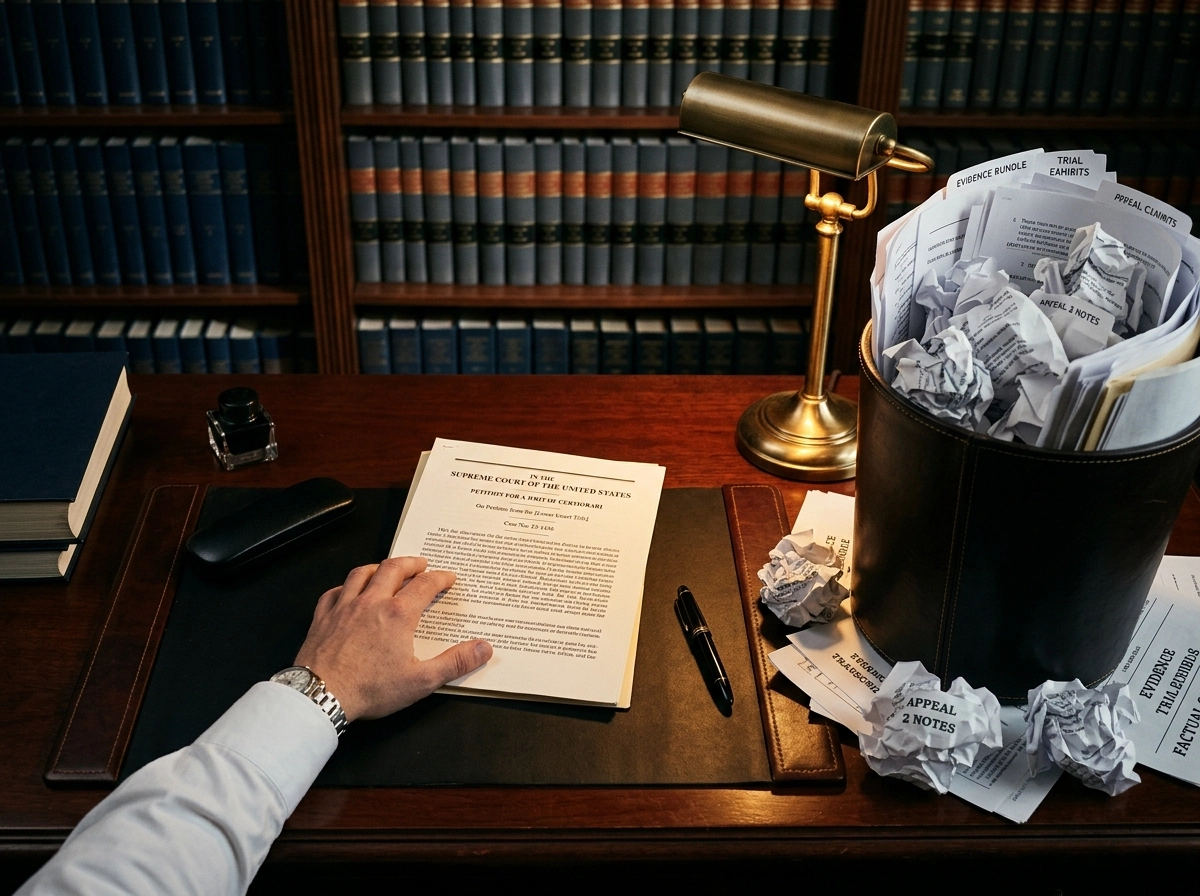
Why the apex court isn’t a better high court
I’ve watched it play out a hundred times. A litigant walks into the Supreme Court clutching a stack of evidence, ready to nitpick every tiny factual mistake the lower courts made. Sixty seconds later, they’re out the door. It’s a brutal moment, and it usually follows years of intense Delhi High Court litigation.
Most people assume the highest court is just a ‘better’ version of the one they just left. It isn’t. This ‘third appeal’ mindset is the main reason so many Special Leave Petitions (SLPs) get tossed immediately.
Here’s the reality: the High Court is a court of record. They care if a trial judge missed a document or misread a witness. But your winning high court strategy might fail at the supreme court because you’re still stuck arguing over who said what years ago. The Supreme Court doesn’t exist to fix every small injustice. It’s a constitutional body using its discretion under Article 136. While they can step in for a massive miscarriage of justice, the bar is sky-high—far higher than most litigants realize until they’re actually standing at the podium.
Why the gap in expectations? In the High Court, you’re hunting for a ‘question of law.’ In the Supreme Court, you need a substantial question of law of general public importance. That’s a huge leap. If the law is already settled, the judges won’t care if the High Court applied it a bit clunkily to your specific case. They want issues that are genuinely debatable or affect the public at large.
This is why many litigants think twice before keeping your Delhi High Court lawyer for an SLP. Moving to the Supreme Court isn’t just a change of address; it’s a total shift in philosophy.
At the office of Shashi Kiran Advocate, we tell clients that the Supreme Court cares less about the ‘truth’ of your facts and more about the ‘correctness’ of the legal principle. Any expert SLP guide will tell you the same: re-arguing facts is the fastest way to get dismissed.
If your case gets thrown out ‘in limine’—right at the start—it’s usually because you didn’t show why your legal error deserves the court’s limited time. If you can’t frame it that way, you’re just another statistic in the 96% dismissal pile.
Why 96% of petitions are dismissed at the threshold
The numbers are brutal. Nearly 96% of Special Leave Petitions (SLPs) get tossed out at the admission stage before they even get a full hearing. This isn’t a fluke. It shows the Supreme Court’s main job as a constitutional filter. Most litigants treat an SLP like a third chance to argue facts. The Court doesn’t see it that way. They view it as a limited, discretionary power under Article 136. When a bench dismisses a matter ‘in limine,’ they aren’t saying the High Court was right. They’re saying the case simply doesn’t belong in the highest court in the land.
The ‘mere error’ vs. ‘substantial question’ divide
When you’re challenging High Court orders, the rules change. In the High Court, you’re usually looking for a judge to fix a mistake. But in the Supreme Court, a ‘mere error’ isn’t enough to get through the door. I’ve seen many cases fail because they didn’t present a ‘substantial question of law of general public importance.’ If your legal issue only affects the two people in the room and doesn’t solve a wider legal problem, it won’t survive the first five minutes of oral arguments.
The SLP filing process is built to weed out anything that doesn’t hit these constitutional marks. It’s why hiring a local Delhi High Court lawyer isn’t enough for the specific demands of an SLP. You have to know how to file a civil appeal SLP with a focus on legal precision. Facts matter, but a long-winded emotional story won’t help you here. In fact, the more irrelevant facts you pile on, the less likely they are to stick.
Why the admission stage is the real battle
Clients often ask if their current High Court lawyer is eligible to appear for the SLP. The hard truth about why the best Delhi High Court lawyers can’t always win is the total shift in strategy. You aren’t just trying to prove you’re right anymore. You’re proving why the law itself needs the Supreme Court to step in.
That’s why you shouldn’t assume your lawyer can handle the appeal. The special leave petition success rate is tied to the reality of the admission stage. You need to check if your counsel can actually file a special leave petition and if they understand how when a case moves to New Delhi the strategy must change. This is where expert SLP preparation is the only thing standing between a quick dismissal and a real hearing.
Trading facts for ‘substantial questions of law’

The jump from the Delhi High Court to Tilak Marg is often a cold shower for litigants. I’ve watched brilliant arguments that won over a High Court bench evaporate in minutes before the Supreme Court. Why? Because the “merits” of your case , the facts, the evidence, the “he said, she said” , are largely irrelevant here.
Under Article 136, the Court isn’t looking for a “correct” result in your specific dispute. It’s looking for a substantial question of law of general public importance. If your petition reads like a story about how the trial court misunderstood a witness, you’ve already lost. Understanding which legal expertise handles the shift from Delhi High Court to a Supreme Court SLP is the first step in avoiding this trap.
Framing the substantial question
A “substantial” question isn’t just an error. It’s a point of law that is debatable, unsettled by precedent, or has a material bearing on the public at large. For instance, in complex criminal matters, arguing about PMLA bail conditions 2026 requires showing how a High Court misapplied constitutional principles, not just that the defendant deserves to be home.
This necessitates a radical courtroom strategy shift. You have to stop being a storyteller and start being a constitutional architect. You need to know how to appeal a High Court judgment in the Supreme Court of India by distilling thousands of pages of trial records into three or four sharp legal queries. The Apex Court rarely interferes with findings of fact unless they’re perverse, so your focus must remain on the legal mechanics.
Supreme Court lawyer differences
There’s a common misconception that your High Court counsel is the best person to lead the charge. But does your current Delhi High Court lawyer have the right to argue in the Supreme Court with the specific brevity the Apex Court demands? The skill set is different.
An Advocate-on-Record (AOR) doesn’t just file papers; they filter the noise. They ensure the grounds for SLP focus on systemic legal failures rather than emotional appeals. If you’re wondering how to secure high-caliber legal representation from a Delhi Supreme Court advocate, look for those who prioritize legal theory over factual rehashing.
So, do you actually need a separate Delhi High Court lawyer for your SLP? Often, yes. The perspective of a specialist who understands the Supreme Court’s discretionary nature can be the difference between a “dismissed” and a “notice issued.” Results vary, but a technical focus on law always beats a broad focus on facts.
Your filing captain: the mandatory role of the Advocate-on-Record
The Gatekeeper of Tilak Marg
If you think your trial lawyer can simply walk into the Supreme Court and file your petition, you’re in for a rude awakening. The Apex Court isn’t just a bigger version of the High Court; it’s a gated ecosystem with its own set of sentries. The most critical gatekeeper is the Advocate-on-Record (AOR).
Under the Supreme Court Rules, no advocate other than an AOR can file an appearance or act for a party. This isn’t just a bureaucratic hurdle. It’s a quality control mechanism. While your High Court counsel might know the facts of your property dispute or matrimonial case by heart, an AOR understands the SLP filing procedure and the specific formatting rigours the Registry demands. I’ve seen countless petitions delayed or dismissed simply because they lacked the precise chronological list of dates or the mandatory certificates.
When you decide whether you should move your case from the Delhi High Court to the Supreme Court, you aren’t just hiring a new name. You’re hiring a procedural specialist. The AOR takes legal responsibility for every word in that petition. They bridge the gap between the broad factual storytelling used in lower courts and the surgical legal precision required at the top.
There are distinct Supreme Court lawyer differences that most litigants overlook until it’s too late. A Senior Advocate might argue the case for ten minutes, but the AOR is the one who ensures the case lives long enough to be heard. They manage the “curing of defects”,a back-and-forth with the Registry,that can make or break your admission chances. It’s a specialized role that requires a deep, lived-in knowledge of the court’s unique temperament.
The surgical anatomy of a winning SLP draft
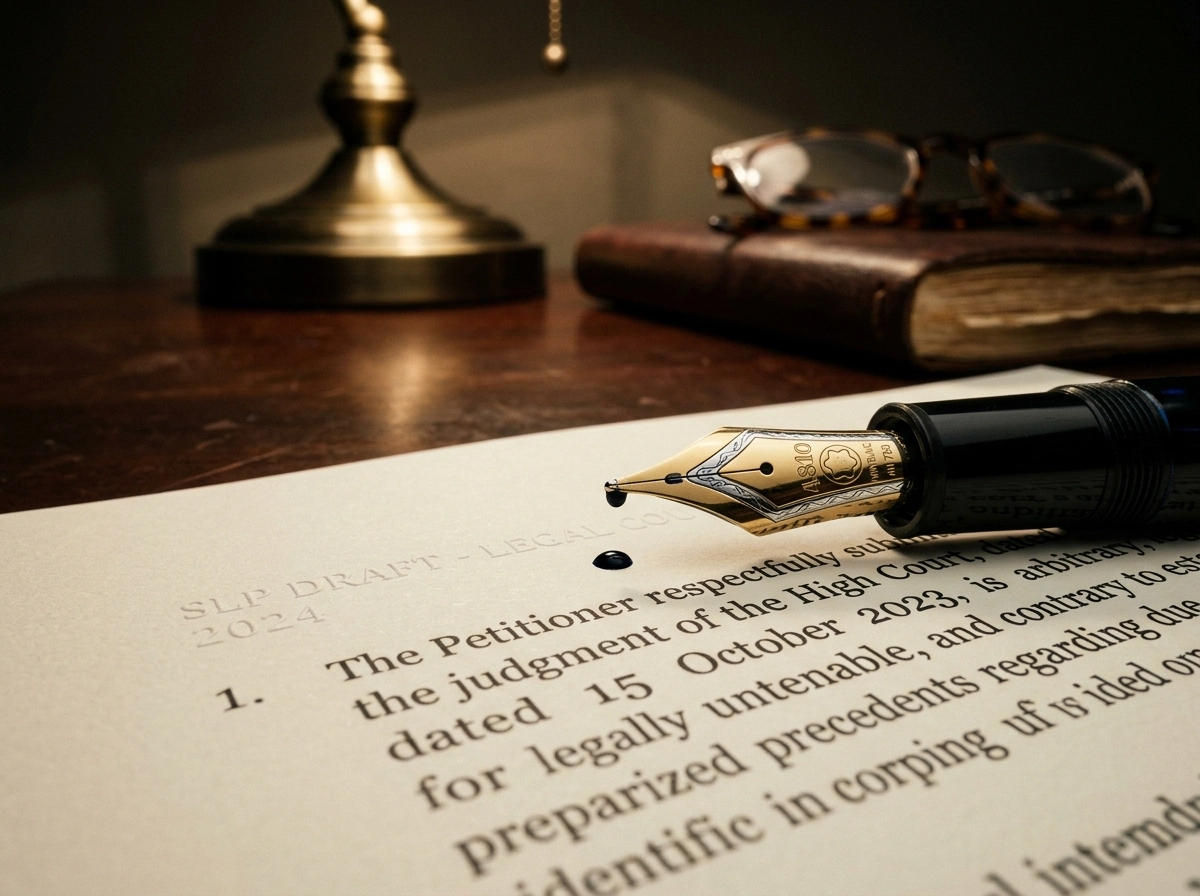
A winning SLP isn’t a story; it’s a surgical diagnosis. Most lawyers fail because they try to re-argue the entire trial in front of a Bench that only has five minutes to decide your fate. You aren’t just filing a petition; you’re asking for permission to be heard. That permission depends entirely on structure.
The synopsis as a legal filter
The Synopsis is the most valuable real estate in your filing. It must distill the entire conflict into a single, undeniable legal error. This is where you justify the SLP filing procedure by highlighting a ‘substantial question of law.’ If your synopsis reads like a grievance list about how the High Court misunderstood a witness, you’ve already lost. It needs to signal that the lower court’s interpretation of a statute is fundamentally broken or conflicts with existing Supreme Court precedents.
The list of dates
And then comes the List of Dates. This isn’t the place for prose or persuasive adjectives. It’s a cold, chronological skeleton of the litigation. Each entry must link directly to a page in the paperbook. If you’re challenging High Court orders, the dates must clearly show the progression of the legal error. Don’t include every adjournment; only include the events that fundamentally altered the course of the case.
Framing the grounds for intervention
The actual grounds for SLP must be framed as errors of law, not errors of fact. But even seasoned practitioners sometimes slip into factual re-appreciation. You must demonstrate that the High Court failed to exercise its jurisdiction or did so in a way that creates a miscarriage of justice. This is where the expertise of an Advocate-on-Record becomes visible,they strip away emotional layers (which judges often find distracting) to reveal the core constitutional issue. While these structural rules are standard, the Court’s appetite for specific details can vary depending on the bench.
Avoiding the third appeal trap
So, keep your questions of law precise. Instead of asking ‘Whether the High Court was right?’, ask ‘Whether Section X of the Act permits Y in the absence of Z?’ This specificity is what separates a generic filing from top legal representation in Delhi’s Supreme Court. It’s about making the judges’ job easier. If they can understand your point in sixty seconds, you’re already ahead of the curve.
Fatal errors that trigger ‘in limine’ dismissals
Imagine standing before the Bench, having spent weeks perfecting your legal theory, only to have the presiding judge glance at your file and say “Dismissed” before you’ve even opened your mouth. This isn’t just a nightmare; it’s the reality for thousands of cases every year. The most common culprit? A simple delay. In the Supreme Court, the limitation period is a hard wall. If you’re filing a Special Leave Petition (SLP) against a Delhi High Court appeal outcome, you usually have 90 days. Miss that window without a truly exceptional reason for condonation, and your petition is dead on arrival.
But procedural speed is only half the battle. I often see litigants treat the SLP as a chance to re-argue facts,trying to convince the court that a witness was lying or a document was misinterpreted. The Supreme Court isn’t a “court of error” for facts. When you appeal a High Court judgment in the Supreme Court of India, you must show a substantial question of law. If you ask the Bench to re-appreciate evidence, they’ll likely dismiss it in limine (at the threshold) because that’s the High Court’s job. While some Benches are occasionally more lenient with minor procedural lapses, the general rule is unforgiving.
Formatting errors also sink more ships than people realize. A messy list of dates or a missing certificate can lead to registry objections that waste precious time. Sometimes, even when the law is on your side, the strategy is wrong. For instance, in complex financial cases, failing to account for specific statutory hurdles like PMLA bail conditions 2026 can result in an immediate rejection. The reality is that the Court is looking for reasons to say “no” to manage its massive docket. Even a high Supreme Court admission rate for certain categories won’t save a petition that feels like a third appeal, which is why the special leave petition success rate remains low for those who ignore these technicalities.
Making the 90-day window work for you

The clock starts ticking the moment that High Court judge signs the order. It’s easy to feel like you have plenty of time, but ninety days disappears fast when you’re trying to flip a factual dispute into a constitutional one. This isn’t just another filing. It’s a specific, targeted legal move.
Why the first thirty days matter more than the last sixty
Too many people treat an SLP like a standard appeal. They wait until the final two weeks to hire an expert, which is usually a disaster. You aren’t just filling out forms; you’re changing your entire approach. You need time to strip away the ‘trial court’ talk and find the specific legal question that makes your case stand out.
Getting an Advocate-on-Record involved early gives them the space to find the ‘hook.’ In the Supreme Court, you often have about sixty seconds to grab a judge’s attention. If you’re still figuring out your strategy on day 85, you’ve already lost. Knowing how to appeal a High Court judgment is only half the battle. The rest is timing.
Even in specialized cases, like checking the enforceability of foreign divorce in India, the window to fix a High Court mistake is tight. At Shashi Kiran’s chambers, we’ve learned that the best petitions come from early, honest talks about where a case is weak.
Don’t wait for the deadline to start sweating. Start cutting the fluff now. The Supreme Court doesn’t care about your frustration—it only cares about a valid reason to step in.
Need an expert to navigate your Supreme Court filing? Advocate handles the technical requirements so your case gets the attention it deserves.
Frequently Asked Questions
Why is my case getting dismissed at the admission stage?
Most cases get tossed because they’re treated like a ‘third appeal’ focused on facts rather than a constitutional issue. The Supreme Court isn’t there to re-examine evidence; it’s there to address substantial questions of law that impact the public or set a precedent.
Do I really need an Advocate-on-Record for my petition?
Yes, it’s mandatory. An Advocate-on-Record isn’t just a procedural requirement; they’re the only ones authorized to file in the Supreme Court. They’ll ensure your petition meets the strict formatting and legal standards that keep it from being rejected immediately.
How does the Supreme Court’s role differ from the Delhi High Court?
The High Court often acts as a forum for correcting lower court errors, but the Supreme Court is an apex constitutional court. It exercises discretionary power under Article 136, meaning it only picks cases that involve significant legal questions rather than just resolving individual disputes.
What happens when a petition is dismissed in limine?
It means the Court decided the matter wasn’t fit for its discretionary intervention. It’s not a judgment on the merits of your case, but it does mean the High Court’s order stands and you’ve reached the end of that specific legal road.
Can I file an SLP after the 90-day window?
It’s incredibly difficult and usually requires a very strong, documented reason for the delay. Honestly, you shouldn’t bank on getting an extension, so it’s best to start your strategic consultation as soon as the High Court order is passed.