

The mandatory gatekeeper of the apex court
Imagine you’ve hired a legal heavyweight, a household name in the High Courts, to represent you at the Tilak Marg gates. You’re ready to file, but there’s a catch: they can’t actually sign your petition. It’s a jarring reality for many litigants to discover that the right of audience in the apex court is split between those who argue and those who file.
The Advocate on Record (AOR) is the mandatory gatekeeper. This isn’t just a tradition; it’s a strict statutory requirement under the Supreme Court Rules 2013. Specifically, Order IV of these rules mandates that no advocate, other than an AOR, can file a Vakalatnama or act for a party in the court. Think of them as the only legal professionals with the “keys” to the Registry.
Why the exclusivity exists
The Supreme Court isn’t just another trial court; it’s an institution that demands technical precision. The AOR system ensures that every Supreme Court filing meets rigorous standards, preventing the Registry from being choked by procedural errors. While a Senior Advocate might focus on the “soul” of the case, the AOR handles the “body”,the formatting, the service of notice, and the curing of defects.
If you’re moving from a state jurisdiction, you’ll find that Supreme Court litigation operates on a different plane of accountability. An AOR must maintain an office in Delhi and clear a notoriously difficult Advocate on Record examination to earn this title. Expert practices like Shashi Kiran Advocate emphasize that securing high-caliber legal representation often starts with this specific procedural partnership. It’s a specialized designation that ensures the person handling your case is intimately familiar with the court’s unique procedural norms. Honestly, without an AOR, your case doesn’t even exist in the eyes of the court registry.
Q: Can my current High Court lawyer file my SLP directly?
The short answer is no
No. It’s that simple. Your High Court lawyer doesn’t have the authority to file your Special Leave Petition (SLP) on their own. Under the Supreme Court Rules 2013, there’s a strict divide between arguing and acting. Anyone with a law license can stand up and speak, but only an Advocate-on-Record (AOR) is allowed to sign a Vakalatnama or submit papers to the Registry.
Litigants trip up here all the time. They think a winning delhi high court lawyer carries the same weight in the Supreme Court. They don’t. If you want to find a sharp supreme court advocate in delhi for immediate legal action, check for that AOR title. If they don’t have it, the Registry will toss your papers before they’re even looked at.
The Special Leave Petition process is messy and full of red tape. When looking for essential steps to find the right supreme court advocate in delhi for your 2025 litigation, you need someone who knows how to navigate the filing desk. Shashi Kiran, an AOR with 35 years in the game, sees cases stall constantly because people didn’t secure your legal victory choosing a top supreme court advocate in delhi for 2026 until it was too late.
Arguing versus acting
Get the roles straight: there’s the ‘arguing counsel’ and the ‘filing counsel’. Your High Court lawyer can still talk in court, but they’re useless for the paperwork. They need an AOR to deal with Special Leave Petition challenges. It’s a two-part system designed for accountability. If you’re trying to find supreme court advocate delhi or just searching for a supreme court advocate delhi, make sure they’re actually registered as an AOR.
People stress over supreme court lawyer delhi fees, and yeah, hiring an AOR is an extra cost. But it’s not optional. Whether you’re scanning the top 10 supreme court advocates delhi or just trying to find the right supreme court advocate in delhi for your case, you’re doing it to unlock swift justice how to find the best supreme court advocate in delhi. Figure out how to find the right supreme court advocate in delhi for your needs now, or deal with the headache of a rejected filing later.
Why the Supreme Court demands a specialized AOR qualification

The barrier to entry: Why generic practice isn’t enough
The Supreme Court operates as a distinct jurisdiction rather than just a final appellate stage. While a trial lawyer might excel at oral arguments, the AOR system exists because the Registry prioritizes technical compliance over rhetoric. It’s a procedural gatekeeper. The court cannot afford to have its docket clogged by administrative errors or non-compliant filings, so it mandates a specialized class of practitioners to act as the primary interface.
Meeting the Advocate on Record eligibility requires more than just a law degree. A lawyer needs four years of active practice before they can even begin the qualification process. This is followed by a mandatory one-year apprenticeship under an AOR with at least a decade of standing. This period involves an intensive study of the Supreme Court Rules, 2013. When you search for a reliable Supreme Court advocate in Delhi for your case, you are hiring a professional who has cleared a rigorous four-paper examination covering drafting, ethics, and leading case law.
Logistical rules are equally stringent. An AOR has to maintain a functional office within a 16-kilometer radius of the Court and employ a registered clerk. These aren’t suggestions; they’re requirements to ensure the Registry can reach the counsel immediately for any urgent corrections. This creates a level of accountability that doesn’t exist in lower courts. If you’re hunting for the best Supreme Court advocate in Delhi for your urgent needs, these AOR requirements India explain why their fee structures and operational methods differ from trial court practitioners.
The qualification process is notoriously difficult, with pass rates often stuck around 15%. Some practitioners argue the exam focuses too much on rote memorization of rules, but it remains the only legal gateway to the Apex Court. This difficulty makes identifying a top Supreme Court advocate in Delhi for your case in 2025 a critical step in your litigation strategy. Shashi Kiran has navigated these procedural waters for decades. Technical precision is a global standard in high-level courts, and the Indian Supreme Court is no exception. You should secure the best Supreme Court advocate in Delhi for your case in 2025 as early as possible. Any top Supreme Court advocate in Delhi for your case in 2025 will confirm that the Registry’s scrutiny of your petition’s format is absolutely unforgiving.
Q: What is the actual difference between an AOR and a Senior Advocate?
Understanding the “actor” vs. the “orator”
Imagine you’ve secured a consult with the most famous surgeon in the country, only to find out they won’t actually admit you to the hospital or handle your paperwork. In the Supreme Court, a Senior Advocate is that specialist surgeon. They’re designated by the court for their exceptional ability and experience, but they are legally barred from “acting,” meaning they can’t file a single page of evidence or even sign a petition.
That’s where the Advocate-on-Record (AOR) becomes the actual engine of the case. While a top Supreme Court advocate in Delhi might focus on the high-stakes oral arguments that sway a bench, the AOR carries the professional responsibility for the entire case file. If the Registry finds a typo in the index or a missing affidavit, they don’t call the Senior Advocate; they call the AOR.
A complementary litigation strategy
The relationship isn’t a hierarchy; it’s a partnership. Think of it as a two-tier litigation strategy. The AOR builds the foundation by drafting the Special Leave Petition, ensuring the record is complete, and managing the relentless procedural hurdles of the Registry. They follow strict rules of practice that are far more rigid than those found in trial courts. The arguing counsel then steps in to refine the legal “points of law” and present them during the brief window of an admission hearing.
I’ve seen cases fall apart because the AOR and the Senior Advocate weren’t in sync. A common mistake is assuming your litigation strategy Delhi High Court translates perfectly to the Supreme Court without an AOR’s specialized input. The reality is that a Senior Advocate’s brilliance is often limited by the quality of the paper-book prepared by the AOR. At Advocate Shashi Kiran’s office, we ensure this bridge is seamless, balancing procedural rigor with the strategic depth needed for success.
The procedural landmines that only an AOR can navigate
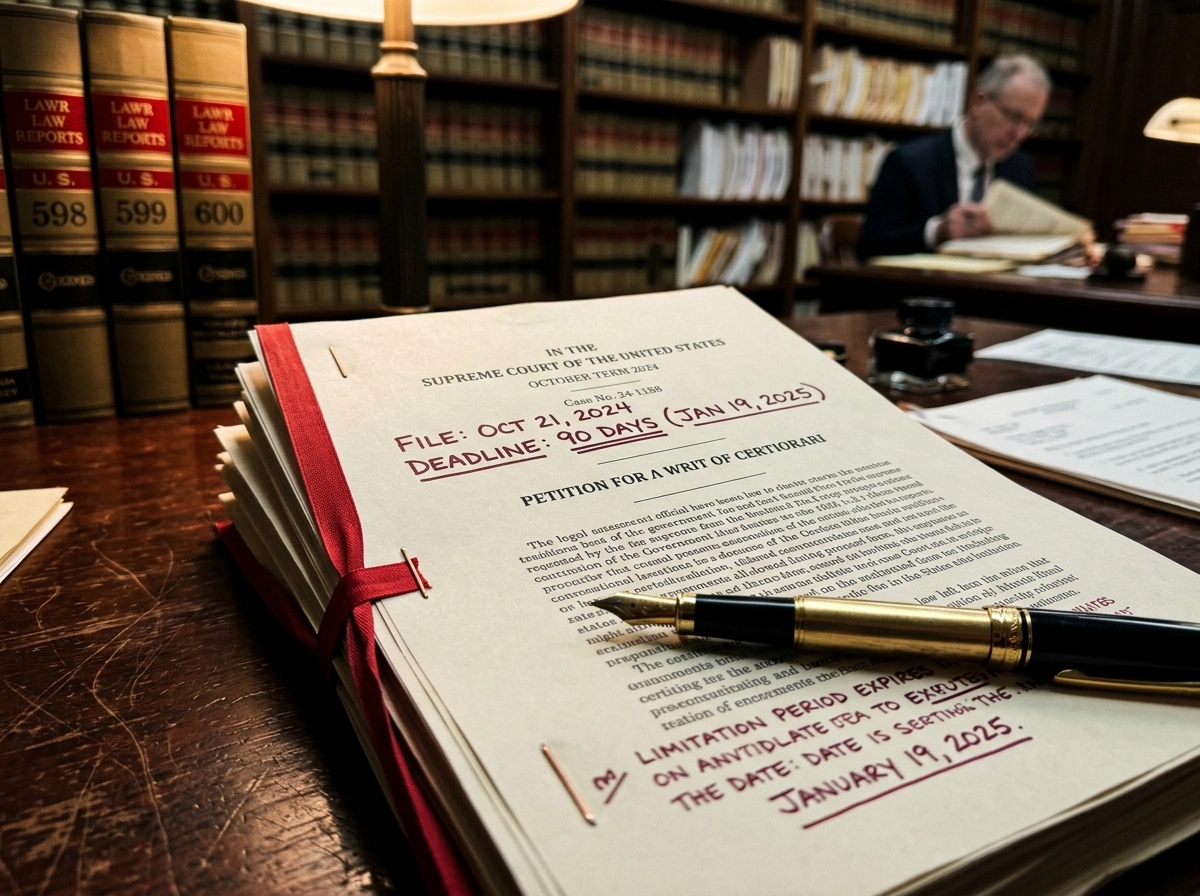
Nearly 40% of fresh matters filed in the Supreme Court Registry are hit with ‘defects’ immediately. Usually, these aren’t deep legal flaws. They’re tiny procedural errors—margins off by a fraction of an inch, the wrong font, or a missing page from a lower court record. If you’re racing against the 90-day clock for the Special Leave Petition process, one rejection is a disaster. This is why the technical precision of AOR filing lawyers is a necessity, not a luxury.
Navigating the scrutiny branch
The Registry’s Scrutiny Branch is famously rigid. They check every line. High Court practitioners are often caught off guard by this level of pedantry. Once a defect is notified, the pressure is on. An AOR has a narrow window to ‘cure’ these objections. If they miss the mark, the matter is listed before the Registrar for non-prosecution. Your case essentially enters legal limbo until you file a formal application for restoration. The Registry doesn’t care if your legal argument is a masterpiece if your margins are wrong. It’s that simple.
It isn’t just about paper quality. The AOR must personally certify that no other similar petition has been filed. This isn’t a routine tick-box; it’s a formal statement of professional accountability. If an AOR gets this wrong, the judges won’t look at the arguing counsel—they’ll look at the AOR. While different jurisdictions have their own quirks, the Indian system is uniquely demanding.
Why professional accountability matters
The Vakalatnama is likely the most undervalued document in a litigant’s folder. In the Supreme Court, this document does more than authorize a lawyer; it binds the AOR to the case’s procedural integrity. This setup keeps the Court from being buried under a mountain of non-compliant filings. I’ve seen cases where a brilliant legal strategy was completely undone because someone ignored the 2013 Rules.
Experienced practitioners like Shashi Kiran Advocate, who has spent over 35 years in these halls, know that a successful filing is a mix of strategy and discipline. When you search for a top Supreme Court advocate in Delhi, you’re looking for someone who can survive the Registry’s fine-tooth comb. It’s a specialized skill. You can’t bypass it if you want your day in court.
Q: How does the 90-day window change your filing strategy?
The 90-day clock for a Special Leave Petition (SLP) starts ticking the moment the High Court signs its order. Most litigants think three months is a luxury. In reality, it’s a trap. If you spend 80 of those days “thinking it over” or searching for a Senior Advocate, you’ve already compromised your case. By the time you reach out to an experienced Advocate on Record, the window for correcting procedural errors has almost slammed shut.
Waiting until the final week forces a rush that the Supreme Court Registry rarely forgives. An AOR isn’t just a rubber stamp for your local lawyer’s draft. They have to verify every page, ensure the translated documents are accurate, and certify that the facts match the lower court records. But even the most efficient AOR can’t fix a poorly compiled record in 48 hours. And if the Registry finds a defect on day 89, you might miss the limitation periods entirely while trying to refile.
So, what happens if you miss the deadline? You’ll have to file a Condonation of Delay application. The court isn’t interested in “the lawyer was busy” or “I didn’t know the rules.” While results vary based on the specific bench, judges rarely accept anything short of an unavoidable medical emergency. It’s a brutal way to lose a case before it even begins.
I’ve seen strong matters fail simply because the paper trail was messy. Engaging an AOR by day 30 gives them time to collaborate with your arguing counsel and spot gaps in the evidence. It’s about strategy, not just survival. While different jurisdictions have their own quirks, such as the procedural rules of practice seen in other apex systems, the Indian Supreme Court is strictly governed by its 2013 Rules. Don’t let a calendar mistake end your legal journey.
Building a resilient team for your final appeal
Choosing the right legal team for your final appeal
Once you understand that the 90-day clock is ticking, the focus shifts from whether you should file to who will lead the charge. Building a resilient team for the apex court isn’t about hiring the loudest voice in the room. It’s about technical precision. You need an Advocate-on-Record (AOR) who doesn’t just sign papers but actively scrubs your petition for the procedural flaws that the Registry loves to flag.
Finding the best Supreme Court SLP lawyer involves looking past the prestige of a High Court win. The Special Leave Petition process is a different beast entirely. It’s a discretionary remedy, meaning the Court is looking for reasons to say “no.” Your AOR is the one who ensures the “yes” by bridging the gap between your local counsel’s facts and the Supreme Court’s rigid requirements.
But how do you vet a team? Look for stability and physical presence. Much like international standards where counsel must register specific office addresses to maintain professional accountability, the Indian AOR must have a registered office within Delhi to remain the primary point of contact for the Court. If your lawyer isn’t familiar with these logistical nuances, your case is already on shaky ground.
And don’t be afraid to ask about their clerk’s experience. A seasoned AOR clerk is often the unsung hero who navigates the Registry’s back-channels to clear technical defects. If you’re seeking legal representation Delhi trusts, someone like Shashi Kiran Advocate brings 35 years of experience to this delicate balancing act. She understands that while a Senior Advocate might provide the oratorical fire, the AOR provides the structural integrity that keeps the case alive.
So, what’s the next move? Stop treating the AOR as a last-minute procedural hurdle. Start by gathering your certified copies and looking for a practitioner who treats your petition as a surgical operation rather than a routine filing. The window is short, and the stakes are final.
If you’re facing a complex legal challenge, Advocate provides the specialized Supreme Court representation you need to navigate these procedural requirements. Call or WhatsApp +91-92121-97427 to reach out today for a consultation.
Frequently Asked Questions
Can my local lawyer file an appeal in the Supreme Court directly?
No, they can’t. Even if your lawyer is highly experienced in the High Court, the Supreme Court Rules mandate that only a qualified Advocate on Record can sign and file documents like a Special Leave Petition.
Why is there a special exam just to file cases in the Supreme Court?
The court requires an AOR to ensure every filing meets strict procedural standards. It’s a way to maintain institutional efficiency, as the AOR is personally responsible for the accuracy of the documents submitted to the Registry.
Does an AOR have to be based in Delhi?
They don’t have to live in Delhi, but they’re required to maintain a physical office within 16 kilometers of the Supreme Court premises. This ensures they’re always accessible for court-related procedural filings.
What happens if I miss the 90-day limitation window?
You’ll likely face a dismissal of your case. It’s crucial to engage an AOR early because the process of preparing, formatting, and curing potential defects takes time, and you don’t want to be rushing at the last minute.
Is the AOR the same person as the Senior Advocate?
They’re usually different people. The AOR handles the procedural filing and the ‘mechanics’ of the case, while a Senior Advocate is often brought in later to focus on the substantive legal arguments during the hearing.