

Choosing the right property lawyer is a critical decision that can significantly impact the outcome of your real estate transactions and legal matters. Whether you’re buying, selling, or dealing with property disputes, having a knowledgeable real estate attorney by your side is essential. As Advocate Shashi Kiran, a seasoned Supreme Court Senior Advocate with over 35 years of experience, emphasizes, securing competent legal property advice is paramount for navigating the complexities of real estate law. This guide provides step-by-step instructions on how to select the best legal property advice for your specific needs, ensuring a smooth and successful experience.
Step 1: Understand Your Specific Legal Needs: Identifying the Right Property Lawyer
Before you begin your search for a property lawyer, it’s crucial to understand the specific legal issues you’re facing. Are you dealing with a simple residential purchase, a complex commercial transaction, or a contentious property dispute lawyer situation? Identifying your needs will help you narrow down your search and find a real estate lawyer with the right expertise. As Advocate Shashi Kiran often advises, clarity on your legal needs is the first step toward a successful resolution.
Types of Property Lawyers and Their Specializations
- Buying Property Lawyer: Specializes in purchase agreements, title searches, and closing procedures. These attorneys ensure that your investment is protected from the start.
- Selling Property Lawyer: Focuses on sales contracts, disclosures, and ensuring a smooth transfer of ownership. Their expertise helps you avoid potential liabilities and maximize your returns.
- Property Dispute Lawyer: Handles disagreements over boundaries, titles, and contracts. These legal professionals are adept at navigating complex disputes and protecting your property rights.
- Estate Lawyer: Deals with property-related matters in estate planning and inheritance. They ensure that your property is managed and transferred according to your wishes.
- Real Estate Litigation Attorney: Represents clients in court for property-related lawsuits. These attorneys provide robust representation and fight for your interests in court.
Step 2: Start Your Search Early and Broadly for a Real Estate Attorney
Don’t wait until the last minute to find a real estate attorney. Starting your search early allows you ample time to research, interview, and select the best candidate. Use online directories like Super Lawyers, referrals from friends or family, and local bar associations to create a list of potential attorneys. Look for a property law expert with a strong reputation and positive reviews. As Advocate Shashi Kiran notes, beginning early provides the advantage of thoroughly vetting potential advocates.
Utilizing Online Resources and Referrals
- Super Lawyers: A directory of attorneys with peer recognition and professional achievement. This platform can help you identify highly-rated attorneys in your area.
- Local Bar Associations: Offer referrals to qualified attorneys in your area. These associations ensure that referred attorneys meet specific standards of competence and ethics.
- Online Reviews: Provide insights into other clients’ experiences with specific attorneys. Platforms like Google Reviews and Avvo can offer valuable perspectives.

Step 3: Check Credentials and Experience of a Real Estate Lawyer
Once you have a list of potential candidates, verify their credentials and experience. Ensure the legal property advice you receive is from a qualified professional. Check their bar admission status, years of practice, and areas of specialization. Look for attorneys who focus primarily on real estate law and have a proven track record in handling cases similar to yours. Remember, experience is invaluable in navigating the complexities of property law.
Key Qualifications to Look For
- Bar Admission: Verify that the attorney is licensed to practice law in your jurisdiction. This ensures they are legally authorized to represent you.
- Years of Experience: More experience often translates to deeper knowledge and skills. Seasoned attorneys are more likely to anticipate potential issues and develop effective strategies.
- Specialization: Look for attorneys who dedicate their practice to real estate law. Specialization indicates a focused expertise and commitment to the field.

Step 4: Review Attorney Profiles and Websites for a Legal Counsel Property
A property lawyer’s online presence can provide valuable information about their expertise and approach. Review their website, paying attention to their areas of practice, client testimonials, and any published articles or blog posts. This can give you a sense of their knowledge and communication style. Look for a legal counsel property expert who demonstrates a clear understanding of real estate law and a commitment to client service. As Advocate Shashi Kiran’s website (https://shashikiranadvocate.com/) exemplifies, a strong online presence reflects professionalism and dedication.
Evaluating Online Presence
- Areas of Practice: Confirm that the attorney specializes in the type of real estate law you need. This ensures they have the relevant expertise for your specific situation.
- Client Testimonials: Read reviews and testimonials to gauge client satisfaction. Positive feedback from previous clients is a strong indicator of competence and reliability.
- Published Content: Assess the attorney’s knowledge and communication skills through their articles or blog posts. This can provide insights into their legal thinking and approach to client service.

Step 5: Schedule Consultations with Multiple Property Rights Lawyers
Don’t settle for the first property rights lawyer you find. Schedule consultations with several attorneys to discuss your case and assess their suitability. Most attorneys offer free initial consultations, providing an opportunity to ask questions, evaluate their communication style, and determine if they are a good fit for your needs. Advocate Shashi Kiran offers confidential consultations to help clients understand their legal options and make informed decisions.
Preparing for Consultations
- Prepare Questions: Write down a list of questions to ask each attorney. This ensures you cover all important aspects of your case and the attorney’s qualifications.
- Discuss Your Case: Explain your legal issues and desired outcomes. Providing a clear and concise overview helps the attorney understand your needs and offer relevant advice.
- Assess Communication Style: Determine if the attorney is responsive, communicative, and easy to understand. Effective communication is crucial for a successful attorney-client relationship.

Step 6: Ask the Right Questions to Find the Best Property Attorney
During your consultations, ask targeted questions to evaluate the attorney’s expertise, experience, and approach. Inquire about their experience with similar cases, their strategies for handling challenging situations, and their fees and billing practices. Understanding these aspects will help you make an informed decision and find the best property attorney for your needs. As Advocate Shashi Kiran often advises, asking the right questions is essential for a successful outcome.
Key Questions to Ask
- “How many cases similar to mine have you handled?”
- “What is your strategy for resolving property disputes?”
- “What are your fees and billing practices?”
- “Do you have experience with real estate litigation?”

Step 7: Evaluate Communication Style and Responsiveness for Real Estate Attorney
Effective communication is crucial when working with a real estate attorney. Choose an attorney who is responsive, communicative, and willing to explain complex legal concepts in plain language. They should keep you informed about the progress of your case and be available to answer your questions promptly. Advocate Shashi Kiran emphasizes the importance of clear and consistent communication in building a strong attorney-client relationship.
Assessing Communication Skills
- Responsiveness: Does the attorney respond to your inquiries in a timely manner? Prompt responses indicate a commitment to client service.
- Clarity: Can the attorney explain legal concepts in a clear and understandable way? Avoiding legal jargon ensures you are fully informed and can make informed decisions.
- Availability: Is the attorney accessible and willing to address your concerns? Accessibility fosters trust and ensures your needs are met throughout the legal process.
Step 8: Consider Experience in Real Estate Litigation if Needed
If you’re dealing with a real estate litigation matter, it’s essential to choose an attorney with courtroom experience. Ask about their experience in handling trials, mediations, and other forms of dispute resolution. An attorney with a strong litigation background can effectively represent your interests in court and protect your property rights. Advocate Shashi Kiran’s extensive experience in both Supreme Court and High Court litigation makes her a formidable advocate in property disputes.
Evaluating Litigation Experience
- Trial Experience: How many trials has the attorney handled? Trial experience demonstrates their ability to advocate effectively in a courtroom setting.
- Mediation Skills: Is the attorney skilled in negotiating settlements? Mediation skills can help resolve disputes efficiently and cost-effectively.
- Dispute Resolution: What is the attorney’s approach to resolving conflicts? A strategic and proactive approach can lead to favorable outcomes.

Step 9: Check References and Testimonials for a Property Law Expert
Before making your final decision, ask the attorney for references or check online testimonials. Speaking with past clients can provide valuable insights into the attorney’s professionalism, expertise, and client service. Look for a property law expert with a proven track record of success and satisfied clients. Positive testimonials reflect the attorney’s commitment to client satisfaction and legal excellence.
Gathering Feedback from Past Clients
- Ask for References: Request contact information for past clients. Speaking directly with references can provide candid insights into the attorney’s performance.
- Read Testimonials: Review online testimonials and reviews. Platforms like Avvo and Google Reviews offer valuable feedback from previous clients.
- Assess Reputation: Evaluate the attorney’s overall reputation in the legal community. A strong reputation is a testament to their professionalism and ethical standards.

Step 10: Discuss Fees and Payment Options with Your Buying Property Lawyer
Transparency in fees and payment options is essential. Discuss the attorney’s hourly rates, flat fees, and any additional costs upfront. Understand their billing practices and payment schedule. Ensure you’re comfortable with the financial arrangements before hiring a buying property lawyer or selling property lawyer. Clear communication about fees prevents misunderstandings and ensures a smooth working relationship.
Understanding Financial Arrangements
- Hourly Rates: What is the attorney’s hourly rate?
- Flat Fees: Does the attorney offer flat fees for specific services?
- Additional Costs: What additional costs might be involved?

Step 11: Trust Your Instincts When Choosing a Selling Property Lawyer
Ultimately, choosing a selling property lawyer comes down to trust and comfort. Select an attorney with whom you feel comfortable communicating, who understands your needs, and who inspires confidence. Trust your instincts and choose an attorney who you believe will represent your best interests effectively. As Advocate Shashi Kiran advises, a strong attorney-client relationship built on trust is key to a successful legal outcome.
Final Considerations
- Comfort Level: Are you comfortable communicating with the attorney?
- Trust: Do you trust the attorney’s judgment and expertise?
- Confidence: Are you confident in the attorney’s ability to represent you effectively?

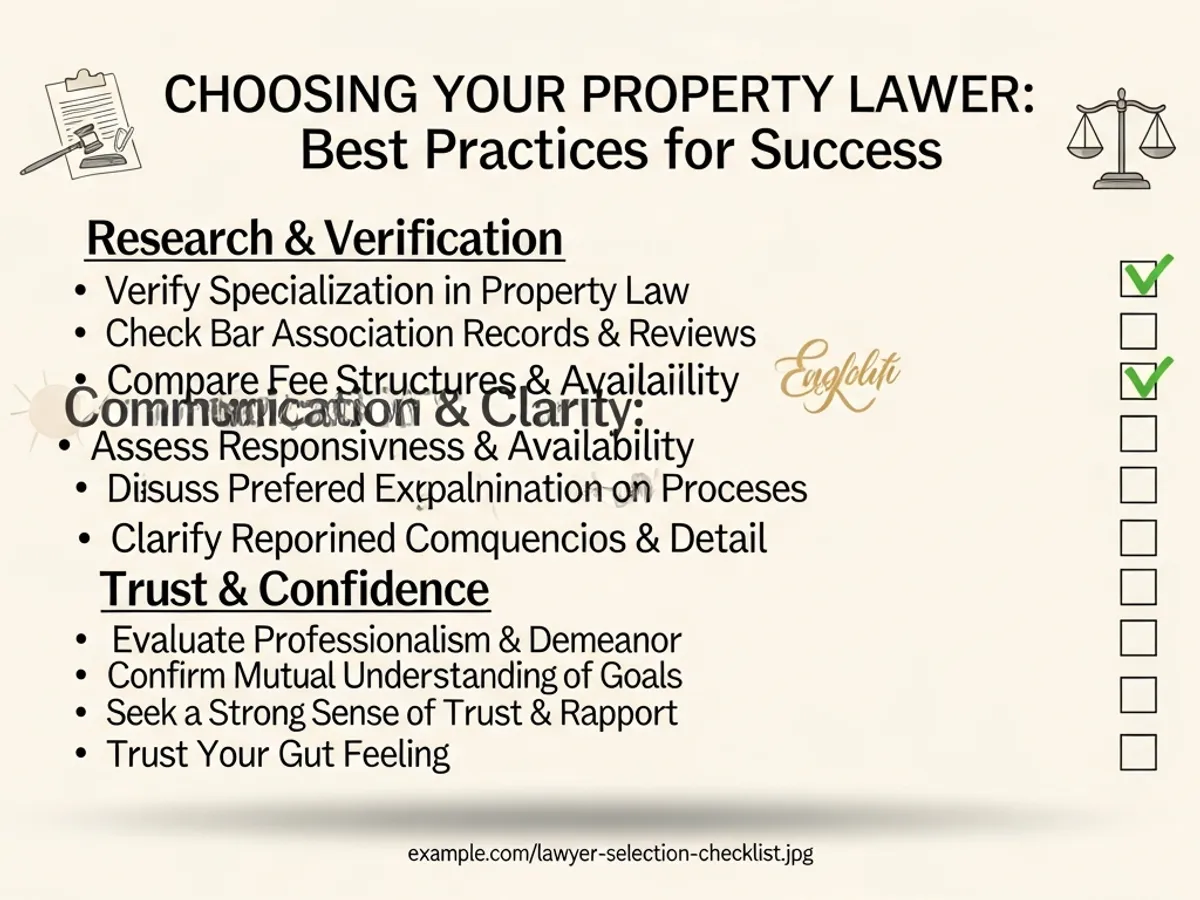
Tips & Best Practices for Choosing a Property Lawyer for Best Legal Outcome
To ensure you select the right property lawyer for your needs, consider these additional tips and best practices:
- Start Early: Begin your search as soon as you anticipate needing legal assistance. Starting early provides more time for thorough research and evaluation.
- Be Specific: Clearly define your legal needs and desired outcomes. Specificity helps you find an attorney with the right expertise for your situation.
- Do Your Research: Thoroughly research potential attorneys and their qualifications. Due diligence ensures you make an informed decision.
- Ask Questions: Ask targeted questions during consultations to evaluate expertise. Targeted questions reveal the attorney’s knowledge and approach.
- Check References: Verify the attorney’s reputation and client satisfaction. References provide valuable insights into the attorney’s performance.
- Evaluate Communication: Choose an attorney who communicates effectively and responsively. Effective communication fosters a strong attorney-client relationship.
- Consider Experience: Prioritize attorneys with experience in similar cases. Experience translates to deeper knowledge and skills.
- Trust Your Instincts: Select an attorney with whom you feel comfortable and confident. Trust and comfort are essential for a successful legal partnership.
Conclusion: Secure Your Property Future with a Competent Estate Lawyer
Choosing the right estate lawyer or property lawyer is a crucial step in protecting your interests and achieving a favorable outcome in your real estate matters. By following these step-by-step instructions, you can confidently select an attorney who meets your specific needs, provides expert legal property advice, and guides you through the complexities of real estate law. As Advocate Shashi Kiran emphasizes, seeking advice from a Delhi High Court Lawyer or a real estate attorney early in the process can prevent costly mistakes and ensure your rights are protected. Remember, a knowledgeable and experienced attorney can make all the difference in ensuring a smooth and successful transaction or resolution to your legal issues.
FAQs: Property Law and Legal Advice
What is a property lawyer and what do they do?
A property lawyer, also known as a real estate attorney, specializes in legal issues related to property. They provide legal property advice, handle transactions, resolve disputes, and ensure compliance with real estate laws, offering comprehensive support to protect your clients’ interests.
When should I hire a property lawyer?
You should hire a property lawyer when buying, selling, or leasing property. Also, when facing property disputes, dealing with title issues, or navigating complex real estate transactions. A legal counsel property expert can protect your rights and interests throughout the process.
How much does a property lawyer cost?
The cost of a property lawyer varies depending on their experience, location, and the complexity of the case. Some attorneys charge hourly rates, while others offer flat fees for specific services. It’s essential to discuss fees and payment options upfront to avoid surprises.
What questions should I ask a property lawyer during a consultation?
During a consultation with a property lawyer, ask about their experience with similar cases. Also, inquire about their strategy for resolving disputes, their fees and billing practices, and their communication style. This helps you determine if they are the right fit for your needs.
How can a property lawyer help with property disputes?
A property dispute lawyer can assist in resolving conflicts over land ownership, boundary disagreements, title issues, or real estate contract disputes. They provide legal advice, negotiate settlements, and represent you in court, protecting your property rights and ensuring a fair resolution.
Advocate Shashi Kiran is a trusted legal expert with over 35 years of experience in property law. Reach out today for a consultation and secure the best legal outcome for your real estate matters: https://shashikiranadvocate.com/

