
Introduction

The digital dock: convenience vs. reality
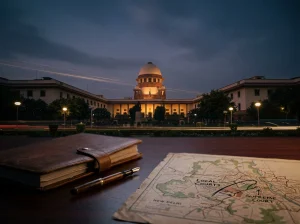
Imagine waking up at 3:00 AM in New Jersey or London, nursing a cold coffee while staring at a pixelated screen, waiting for a clerk in New Delhi to call your name. For many Non-Resident Indians (NRIs), this isn’t a tech-startup dream; it’s the reality of modern litigation. The NRI virtual hearing Supreme Court setup has fundamentally changed how we handle cross-border disputes, yet I’ve seen many litigants assume that “virtual” means “automatic.”
But is this shift actually winning cases, or just providing a more convenient way to lose? I’ve spent over three decades navigating the Indian judicial system online and offline, and the truth is often found in the friction. While the Supreme Court has made strides in remote court appearances for NRIs, the system still prioritizes the “open court” principle. This means a judge can still demand your physical presence if a screen isn’t sufficient for complex evidence or cross-examination.
It’s easy to get caught up in the convenience of filing from home. However, the NRI court access environment is littered with technical dismissals and procedural traps that even the tech-savvy might miss. Whether it’s a property dispute in Punjab or a matrimonial matter in Delhi, the bridge between your overseas life and an Indian courtroom is fragile. At the office of Shashi Kiran Advocate, we often see how a poorly managed digital presence can undermine a perfectly valid legal argument.
So, before you rely solely on a link to save your case, we need to talk about the reality of what happens when the camera turns on. You don’t want to find out the hard way that a technicality ruined your chances. Are you prepared for the “what ifs” of the digital dock?
Digital access vs. procedural reality: why your screen time matters
The Supreme Court of India’s e-Committee reports that over 2.5 crore (25 million) hearings have happened via video conferencing since 2020. This data points to a change in how the law defines “presence.” For an NRI, video conferencing Indian courts means the physical distance between London or New York and New Delhi is no longer a barrier to the courtroom.
A Zoom link isn’t a casual invitation. Under the Model Rules for Video Conferencing, a remote legal appearance India carries the same weight as standing in the courtroom well.
I’ve seen cases where litigants try to log in from a moving car or a noisy cafe. That’s a mistake. The court treats your digital window as a formal extension of the judicial precinct. If your connection drops or the background is distracting, the judge can treat it as an unauthorized absence. While the system works, it isn’t always perfect. Bandwidth issues in rural registry offices can still stall a session.
The legal weight of your digital shadow
NRI court access relies on following strict procedures. Your identity must be verified by a court-appointed coordinator or through an affidavit. This is especially sensitive in family law. For instance, in cases of inter-country adoption India 2026, the judge scrutinizes the “presence” of the parents to rule out any coercion.
Showing up is only half the battle. You need a Supreme Court virtual hearing strategy that accounts for time zones and digital document sharing. Don’t assume that a foreign divorce decree gets a “rubber stamp” just because the hearing is virtual. It won’t. You still need an experienced Supreme Court advocate in Delhi to manage the Supreme Court litigation process. Working with Shashi Kiran Advocate ensures your digital presence is backed by actual procedural expertise.
Is the screen enough? Sometimes. But if you’re a government employee and your service law lawyer Delhi is arguing a complex appeal, your Supreme Court legal representation might still suggest being there in person for high-stakes cross-examinations. The tech is a tool, not a total replacement for the gravity of the law.
The Power of Attorney is your digital bridge

Photo by Matheus Lara on Pexels
The power of attorney is your digital bridge
Virtual hearings handle the logistics of your appearance, but the Power of Attorney (PoA) validates the legal authority behind it. It’s the anchor. Even with 4K video feeds, the Supreme Court demands a verifiable link to your specific intent. For an NRI, this document is the backbone of any cross-border litigation strategy.
Moving beyond the general power of attorney
Many NRIs rely on dusty, broad General Power of Attorney (GPoA) documents signed years ago for a relative. That is usually a mistake. In the Supreme Court, vague paperwork triggers unnecessary litigation and procedural friction. I have watched cases grind to a halt because a GPoA didn’t explicitly authorize filing Special Leave Petitions (SLPs) or lacked a valid apostille.
A Special Power of Attorney (SPoA) is the smarter play. It restricts an agent’s power to specific court actions, which stops misuse before it starts. This matters when NRI virtual hearing system failures happen. If your connection drops, your representative needs the authority to request an adjournment or enter a statement on your behalf while you are offline.
The risk of procedural misalignment
Matrimonial cases carry even higher stakes. I often see confusion regarding why Indian courts reject foreign divorces despite the parties participating virtually. Without a tight PoA and a grasp of Section 13 CPC protection, an NRI might find their foreign decree is essentially useless in India.
You need an Advocate-on-Record who understands these technical nuances. Securing legal representation in Delhi’s Supreme Court for 2026 means hiring counsel like Shashi Kiran. You need someone who can connect your remote location to the bench’s formal expectations.
Navigating complex statutory hurdles
In aggressive economic offense cases, the PoA is a defensive shield. Navigating PMLA bail conditions 2026 requires airtight documentation. If you aren’t there in person, the court will grill your PoA holder with rigorous scrutiny.
The screen brings you into the room, but the paper still holds the weight. Don’t assume digital access lets you skip strict compliance with the Power of Attorney Act.
When the video link fails: technical and ethical friction
The cross-examination trap and digital lag
Even with a valid Power of Attorney in place, the technology itself often creates what I call a “cross-examination trap.” I’ve observed sessions where a lag of just two seconds completely disrupts the rhythm of a witness’s testimony. It isn’t just a minor technical glitch; it’s a strategic disadvantage. When you’re making a remote legal appearance India from a different time zone, the psychological distance can make you appear less credible to a judge who is used to reading body language in a physical room.
The digital divide isn’t just about who has high-speed internet. It’s about the environment. If your connection drops during a Supreme Court video conferencing session, the court might proceed without your input or simply adjourn the matter. This leads to costly delays that most NRIs are trying to avoid. You have to wonder: is the convenience of your living room worth the risk of being silenced by a flickering router?
Technical friction and ethical boundaries
Technical requirements for an NRI virtual hearing Supreme Court are surprisingly strict. You need more than just a laptop; you need a dedicated, quiet space that respects the solemnity of the bench. But what happens if the system fails you at the last second? We’ve analyzed the protocols for when the NRI virtual court system doesn’t grant access during a live hearing, and the fix usually requires immediate, high-pressure coordination with your Advocate-on-Record.
And let’s be honest, virtual access isn’t a magic wand for complex criminal or economic matters. While it works for property disputes, the standards remain much higher for cases involving personal liberty. For example, the PMLA bail conditions 2026 show that despite digital shifts, the physical presence of the accused or rigorous procedural compliance is still the gold standard. Working with an expert like Shashi Kiran Advocate ensures these technical hurdles don’t become legal landmines. The reality is that the system is still evolving, and sometimes, that screen is more of a barrier than a bridge.
Essential FAQs for NRIs navigating the Supreme Court

Imagine sitting in a London flat at 4:30 AM, nursing a cold coffee while waiting for a Cisco Webex link to go live. You are Item 22 on the board for a property dispute in the Supreme Court of India. Your screen flickers, the court master admits you to the virtual room, and suddenly you are staring at the bench. This is the reality for thousands of Non-Resident Indians (NRIs) today. But when the judge asks a specific question about an annexure you didn’t print out, the distance between London and New Delhi feels like a canyon.
I’ve seen many litigants assume that virtual access equates to a DIY legal process. It doesn’t. Here are the most pressing questions I get asked regarding the logistics of NRI virtual hearing Supreme Court appearances.
Can I represent myself in a virtual hearing from abroad?
Technically, the law allows for a ‘party-in-person’ to appear, but the Supreme Court has very strict procedural requirements. You cannot simply log in and start talking. Every petition must be filed through an Advocate-on-Record (AoR). Even if the bench grants you permission to speak, you’ll need a seasoned professional to handle the legal strategy Supreme Court cases require. Without an AoR to navigate the filing and ‘mentioning’ process, your screen time will likely be limited to watching your case get dismissed on a technicality.
Is a digital signature enough for my Power of Attorney?
No. This is where most people stumble. While the hearing is digital, the foundational documents often aren’t. A Power of Attorney (PoA) for litigation must be physically signed, notarized, and usually apostilled or attested by the Indian Embassy in your country of residence. If you are involved in Power of Attorney litigation, the court will scrutinize the ‘physicality’ of these documents. I’ve seen cases stalled for months because an NRI tried to use an e-signature on a document that required a wet-ink stamp from a consulate.
What happens if my internet connection drops during the hearing?
The court moves fast. If your connection fails, the bench won’t necessarily wait for you to reboot your router. This is why having a physical presence in the courtroom through your counsel is vital. At the office of Shashi Kiran Advocate, we often act as the bridge , ensuring that even if your video feed cuts out, your legal interests are protected by someone standing right in front of the judges. If you’re unsure about how this works, you can reach out today for a consultation or call +91-92121-97427.
Do I need a Senior Advocate if I am appearing virtually?
Virtual access doesn’t change the hierarchy or the ‘weight’ of the arguments presented. In high-stakes matters, understanding the authority of a Supreme Court Senior Advocate is essential. They bring a level of gravitas that can be even more important through a screen, where nuances in body language are lost. Results aren’t always predictable, and some benches are more tech-friendly than others, but a Senior Advocate knows how to command the room, even a virtual one.
Are there extra costs for virtual hearings?
You’ll save on airfare and hotels, which is a massive relief. However, don’t expect the legal fees to drop significantly. The level of preparation, the drafting of Special Leave Petitions (SLPs), and the time spent in the ‘virtual queue’ remain the same. You’re paying for expertise and a decade’s worth of trial experience, not just for a seat in a room.
The part nobody warns you about: notarization and jurisdictional traps
The paperwork trap: why your screen time isn’t enough
A crystal-clear video connection won’t save a case that collapses over a missing stamp or a botched affidavit. It’s a common mistake. NRIs often treat the remote legal appearance India provides as a total replacement for being there in person. It isn’t. At its heart, the Indian judiciary still runs on paper. If you’re using WhatsApp chats or emails as evidence, Section 65B of the Indian Evidence Act is your gatekeeper. No certificate? Then those digital records don’t exist in the eyes of the judge.
Most friction happens during Power of Attorney litigation. Don’t assume a PoA signed in New York or London works instantly in Delhi. You need it notarized, then apostilled or attested by the Indian Consulate. But there’s a catch. Once that paper hits Indian soil, it usually requires “adjudication” for stamp duty within a strict window. Miss that deadline, and your lawyer might be blocked from filing the petition entirely. It’s a boring procedural hurdle, but it can freeze a case for months.
You have to look past the webcam to build a real cross-border litigation strategy. You need an Advocate-on-Record who knows the virtual hearing is just the final act of a long administrative drama. We’ve seen it at Shashi Kiran Advocate: courts are getting better with digital filings, yet some registrars still demand “wet-ink” originals for certain undertakings. Old habits die hard.
Watch out for jurisdictional traps. Simply appearing virtually in an Indian court might accidentally trigger a “submission to jurisdiction.” This can mess with parallel cases you have running in your home country. It’s a legal minefield. The system is accessible now, sure, but the rules for authenticating documents are just as rigid as they were thirty years ago.
Closing or Escalation

Photo by Boko Shots on Pexels
The NRI virtual hearing Supreme Court system isn’t just a temporary convenience; it’s a permanent shift in how we approach cross-border justice. But as we’ve seen, a stable internet connection doesn’t replace a sound legal strategy. The friction points,from notarization hurdles to the nuances of a cross-border litigation strategy,require more than just digital access. You need a presence that commands the courtroom even when you aren’t there.
So, ultimately, the outcome of your case hinges on the quality of your legal representation for NRIs. It’s about navigating a hybrid reality where the court expects digital speed but still demands procedural perfection. While the digital path is clearer now, it’s not a silver bullet. Relying on local relatives or outdated documents is a risk you can’t afford.
If you’re managing complex property or family matters from abroad, don’t let distance compromise your rights. At Shashi Kiran Advocate, we provide the authoritative guidance needed to navigate India’s highest courts. Reach out today for a consultation or call or WhatsApp +91-92121-97427. The system has changed, but the need for a seasoned, empathetic advocate remains the only constant you can bank on.
If you’re struggling to manage your case from abroad, Advocate provides the expert guidance you need to navigate the Supreme Court. Reach out today for a consultation at +91-92121-97427.
Frequently Asked Questions for NRI Litigants
Can I handle my entire Supreme Court case from abroad using only video links?
Honestly, it’s rarely that simple. While virtual hearings are great for routine matters, the court still demands physical presence for certain critical or criminal proceedings. You’ll need a solid local strategy to bridge the gap when the bench decides a video link isn’t enough.
Why is a Power of Attorney still my most important document in a digital world?
Think of it as your legal proxy when you can’t be there in person. Without a properly executed and notarized PoA, your lawyer’s hands are tied, and you’ll struggle to move forward with filings or evidence submission. It’s the foundation of your entire case.
What happens if my video connection drops during a crucial hearing?
It’s a major headache, but the court usually allows for a brief reset if the glitch is clearly technical. That said, you don’t want to rely on luck; having an Advocate-on-Record who knows the system helps ensure you’re prepared for these inevitable tech hiccups.
Is notarizing my documents abroad really that strict?
It’s non-negotiable. If your documents aren’t properly apostilled or notarized according to Indian standards, the court will likely reject them. Don’t let a simple authentication error derail your case before it even starts.