


Why the Delhi High Court isn’t just another trial court
Litigants often mistake the Delhi High Court (DHC) for a standard trial court. It’s a costly error. While most high courts stick to appeals, the DHC is an outlier due to its “Original Side” jurisdiction. For high-value suits, this is your first stop. You aren’t just debating legal theory; you’re navigating a high-precision technical machine that demands a tailored Delhi High Court litigation strategy.
Survival in this forum is tied to the Delhi High Court (Original Side) Rules, 2018. They’re rigid. Far more so than district court protocols. A generalist might grasp your case’s merits, but why hiring a Delhi High Court lawyer differs from Supreme Court representation is really about these procedural landmines. Miss a filing window or botch the step-by-step process guide for commercial matters, and you’re done. You don’t just lose time; you lose the right to present evidence. Period.
The hidden cost of procedural errors
When vetting a Delhi High Court lawyer, you’re essentially paying for their skill in clearing the Registry’s hurdles. I’ve seen filings get bounced for weeks because counsel didn’t know which documents will your Delhi High Court lawyer request first. Every “defect” raised by the Registry burns money. It’s a drain on your budget that happens before a judge even looks at your petition.
Proximity matters, so finding an advocate near Delhi High Court helps with logistics, but technical depth is what saves you. A seasoned Delhi High Court advocate delivers legal advice Delhi High Court benches actually respect. They know the court’s tempo. You also need to look ahead. Is your lawyer eligible to appear for your SLP if things go south? Most can’t file a Special Leave Petition or grasp how to hire supreme court lawyer india for that eventual transition. At Shashi Kiran’s office, we build the High Court foundation for the long haul. No one can guarantee a win, but cutting out unforced procedural errors shifts the odds in your favor.
The price of a name vs. the cost of a mistake

A bail application in the Delhi High Court can fluctuate from ₹15,000 to upwards of ₹1.5 lakhs depending entirely on the seniority of the counsel involved. In a legal environment where court costs are nominal and rarely cover the actual fees paid, the legal fee structure India utilizes is almost exclusively a private contractual matter. This means you aren’t just paying for hours; you’re paying for the risk of being wrong in a high-stakes forum.
The trap of the per-hearing model
Many litigants believe they’re saving money by opting for a lower per-appearance fee. But this often creates a misaligned incentive that favors the lawyer over the client. If an advocate only earns when they stand before a judge, there’s less motivation to resolve a matter through a single, decisive argument. Instead, you might face a series of adjournments and “pass-overs” that bleed your budget dry over eighteen months.
And that’s where the hidden costs live. A lawyer who lacks specific High Court experience might struggle with the Delhi High Court (Original Side) Rules, 2018. If they fail to navigate these procedural hurdles, your case could face “office objections” or even dismissal on technical grounds. Fixing these errors often costs more than the initial filing ever did. Results vary, but the price of correcting a mistake is almost always higher than the price of preventing one.
Why seniority matters in New Delhi
When hiring legal counsel in Delhi, seniority isn’t just a badge; it’s a filter for complexity. A senior advocate understands the “culture” of specific benches and knows which arguments will resonate in the first sixty seconds of a hearing.
But you must also consider if your current counsel is prepared for the long haul. Sometimes, the best Delhi High Court lawyers can’t always win in the Supreme Court because the skill set shifts from procedural agility to constitutional depth. If your lawyer doesn’t have the foresight to build a record for an eventual appeal success rate, you might be paying for a dead end.
Aligning costs with outcomes
At Shashi Kiran Advocate, we’ve seen clients spend more on correcting a botched property dispute filing than they would have spent on a veteran practitioner from day one. Transparency is the only way to avoid this. Before you commit, ask for a written fee agreement.
As Karl Rock’s blog on Indian legal fees points out, clear terms prevent “fee-loading” for minor administrative tasks. You should also verify if you actually need a separate Delhi High Court lawyer for your SLP or if your current counsel can handle the transition. Hiring a lawyer in New Delhi shouldn’t be a gamble on who has the lowest price,it should be an investment in who has the fewest mistakes.
Vetting your advocate: the ‘no-fluff’ interview checklist
So, you’ve realized that a cheap lawyer is a luxury you can’t afford. Now comes the hard part: the actual sit-down where you have to look past the mahogany desk and the intimidating wall of law reporters to see if there’s a real strategist underneath. Don’t let a polished office or a prestigious last name distract you from the mechanics of your case. You need to strip away the fluff during the initial consultation.
interrogating the ‘who’ and the ‘how’
One of the biggest mistakes I see is clients assuming the senior partner they meet is the one doing the heavy lifting. It’s a classic bait-and-switch. Ask directly: “Who is drafting the main petition, and will you be the one arguing every significant hearing?” If the work is being farmed out to a junior without strict oversight, you’re paying senior rates for junior mistakes.
A high-performing delhi high court lawyer should be able to map out a clear court case strategy immediately. They shouldn’t just promise to “file a reply.” They should explain how they intend to handle the specific bench your case is likely to land before. And if they can’t explain the logic behind their approach in plain English, they probably don’t understand it well enough themselves.
testing technical depth
The Delhi High Court is a procedural labyrinth. If your case involves a civil suit, ask them how the Delhi High Court (Original Side) Rules, 2018 will impact the timeline of your discovery and inspection. A generalist will stumble here; a specialist will give you a timeline.
You also need to know if they’re thinking three steps ahead. For instance, when a case moves to New Delhi, does your strategy account for the eventual possibility of an appeal or a Special Leave Petition? This kind of foresight separates a reactive lawyer from a proactive one. At an established practice like Shashi Kiran Advocate, the focus is often on this long-term trajectory, ensuring today’s win doesn’t become tomorrow’s procedural nightmare.
the transparency audit
Finally, pin them down on the “per-appearance” trap. Ask for a milestone-based fee structure instead. If they insist on charging for every minor mention, they have a financial incentive to let the case drag. True expertise is confident enough to quote for results, not just for showing up. Ask: “What is the most likely reason we could lose this on a procedural ground?” If they say there is zero chance, walk out. Honesty about risk is the highest form of professional competence in any advocate vetting process.
A story of the ‘expert’ who missed the registry deadline
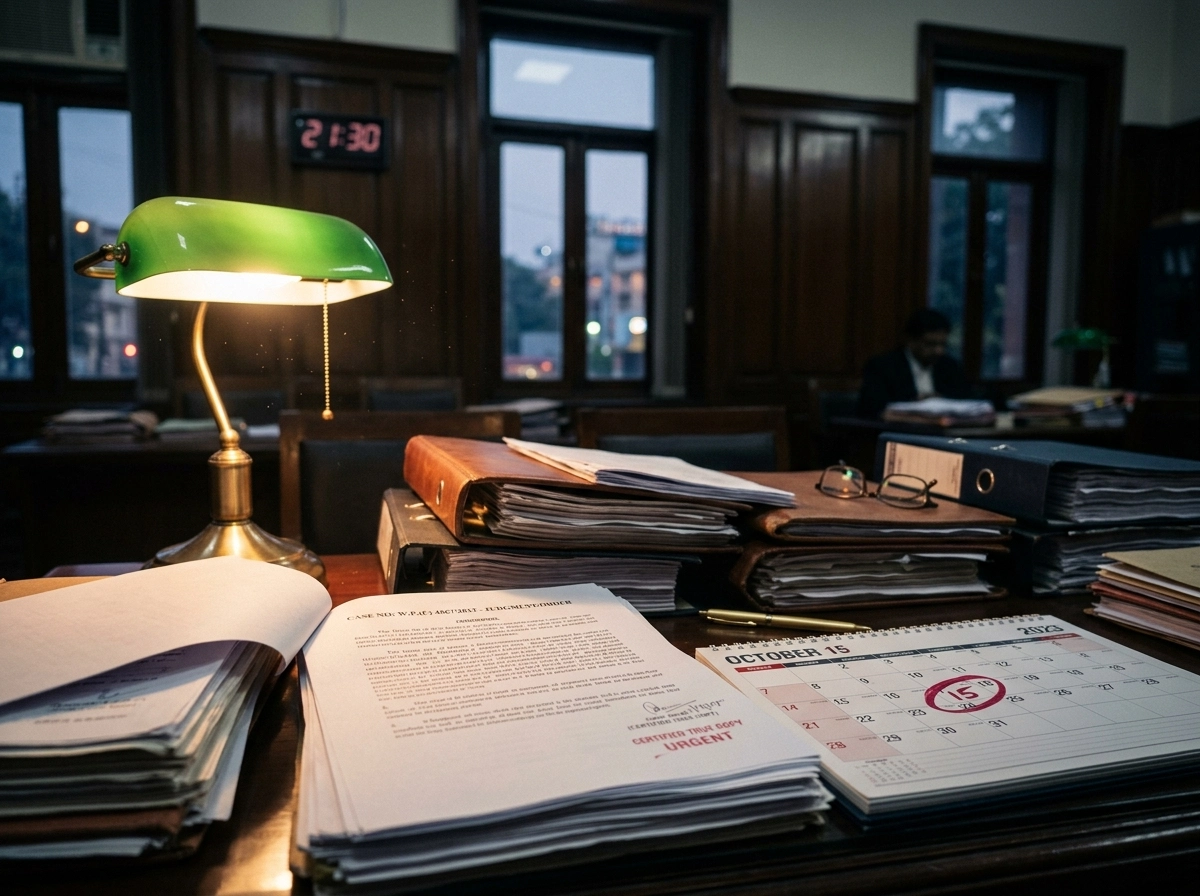
The high cost of a missed 90-day window
I once saw a high-stakes commercial suit worth crores nearly collapse for the simplest reason. The client hired a smooth-talking advocate who knew strategy but clearly hadn’t spent enough time in the actual Registry. They treated the Delhi High Court like a district court, assuming liberal adjournments were just a request away. They were wrong.
The DHC doesn’t play that way. Under the Delhi High Court (Original Side) Rules, 2018, timelines are often set in stone. Take the 90-day limit for filing a replication. When this expert missed that window, the client’s chance to bring new facts into the record vanished.
It was a disaster.
Instead of moving the case forward, the client spent the next six months paying for interlocutory applications just to patch up a mistake that should never have happened. Effective Delhi High Court litigation is as much about the administrative maze as it is about the courtroom. This is exactly why hiring a local delhi high court lawyer isn’t enough for your special leave petition or a complex suit if they don’t get the Original Side culture.
If your case hits a wall because of these blunders, you’ll likely have to pivot to a higher forum. You’ll want to check does your current delhi high court lawyer have the right to argue in the supreme court before you’re forced to start the learning curve over with a new team. Procedural errors turn cheap fees into financial sinkholes faster than anything else.
Billing models that actually protect your wallet
Registry mistakes are expensive, but a poorly structured fee agreement is a recurring leak. In the Delhi High Court, where a single case can stretch through years of ‘effective’ and ‘ineffective’ hearings, how you pay matters as much as how much you pay. The traditional per-hearing model is the most common legal fee structure India uses, yet it often creates a conflict of interest. If an advocate earns only when they stand before a judge, there’s little financial incentive to resolve a matter quickly through mediation or tight drafting.
The trap of per-hearing billing
It’s a model that looks accessible, perhaps ₹5,000 or ₹25,000 per appearance, but the math fails during ‘adjournment culture.’ You might pay for a lawyer to simply show up and request a new date because the registry hadn’t processed a document. This is why understanding the Delhi High Court (Original Side) Rules, 2018 is essential. Knowing when process fees are due or how filings are handled prevents you from paying for avoidable administrative appearances. This doesn’t always apply in high-stakes criminal matters where every hearing is a battle for liberty, but for civil disputes, it’s often a sinkhole.
Shifting to milestone-based transparency
Milestone-based billing offers a more protective framework. This structure segments the litigation into discrete phases: drafting and filing, the admission stage, interim applications, and final arguments. It aligns the advocate’s incentives with the client’s objectives. When hiring a lawyer in New Delhi for complex suits, a flat fee for the admission phase keeps the focus on securing notice rather than billing for every Tuesday the case appears on the board. While flat fees provide predictability, they may not account for volatile interlocutory shifts; defining ‘extra’ work early is essential.
Flat fees for high-stakes matters
For specific actions like bail applications, flat fees are usually the safest financial bet. Whether handling a standard petition or navigating PMLA bail conditions 2026, upfront pricing prevents ‘fee-loading’ during high-pressure windows. At the office of Shashi Kiran Advocate, we prioritize this clarity. We want to make sure the legal representation fees India requires don’t become a secondary trauma. Always document the scope, including conferences and clerkage, before signing the first vakalatnama.
Taking the lead on your legal strategy

Once you’ve settled on a billing model, you can’t just step back and hope for the best. Taking the lead means moving from a passive payer to an active strategist. The most common mistake I’ve seen isn’t simply choosing the wrong lawyer; it’s failing to document expectations before the first filing hits the registry.
A robust advocate vetting process must culminate in a signed fee agreement. This isn’t just about the money; it’s about defining the scope of work. Does your fee cover miscellaneous applications? What about the specific Delhi High Court (Original Side) Rules regarding process fees and filings? If you don’t nail this down, “extra” costs will inevitably creep in as the case progresses.
But transparency goes both ways. When hiring legal counsel in Delhi, you’re buying their judgment, not just their time. Experience matters because it prevents the procedural resets that double your bill. Proactive litigation costs management starts with a clear roadmap of every phase, from the initial notice to the final decree. Expert advocates like Shashi Kiran often emphasize that a well-defined strategy is the only real defense against spiraling legal debt.
So, ask for a written breakdown. It might feel awkward to push for specifics, but a professional will welcome the clarity. How much of your current strategy is based on a handshake rather than a hard plan?
If you’re worried about hidden costs or procedural delays, Advocate Shashi Kiran provides transparent, expert representation to keep your case on track.
People also ask
How do I know if a lawyer is actually experienced in the Delhi High Court?
Ask them specifically about their experience with the ‘Original Side’ rules and how they handle registry objections. If they can’t explain the specific procedural nuances of the DHC, they might be treating it like a standard district court, which usually leads to delays.
Is it better to pay a flat fee or per-appearance fees?
Honestly, flat-fee or milestone-based billing is almost always safer for you. Per-appearance fees can accidentally incentivize a lawyer to prolong your case, whereas a milestone agreement keeps everyone focused on reaching the finish line.
Does a more expensive lawyer always guarantee a better result?
Not at all. A high fee doesn’t fix a weak legal strategy or a lack of procedural knowledge. You’re better off hiring someone who understands the specific bench and the court’s culture rather than just paying for a big name.
What happens if my lawyer misses a filing deadline?
It’s a major headache that can lead to your case being dismissed or delayed for months. That’s why you should always ask your advocate how they manage their internal deadlines before you sign the Vakalatnama.


