

The document that starts it all: understanding the Vakalatnama
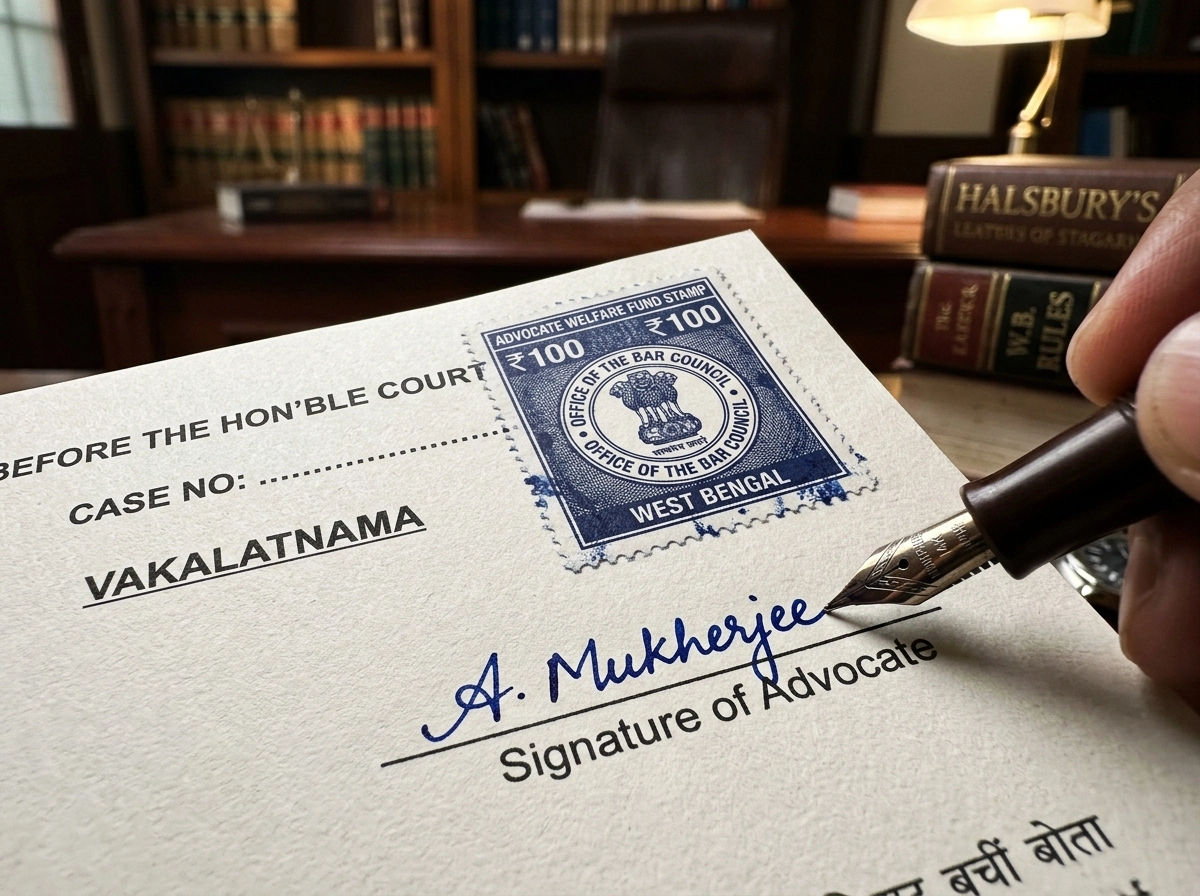
You’ve picked your lawyer and settled on a plan. You’re ready to go. But the Delhi High Court (DHC) Registry doesn’t care about your verbal pact. Without a signed Vakalatnama, your lawyer is just a stranger in the eyes of the court. It’s the only way an advocate for Delhi High Court gets the legal authority to speak for you. The Registry doesn’t do favors.
why the registry rejects your filing
It’s annoying, but a five-rupee stamp can stop a case cold. In Delhi, the Advocate Welfare Stamp has to be on that paper. No exceptions. If you forget it, the Registry will flag your file immediately. This is one of the main ways hiring a Delhi High Court lawyer feels different from other courts. The rules here are strict and they don’t bend.
Everyone involved needs to sign. If it’s a company case and you’re hiring a lawyer in Delhi, you’ll need a board resolution or specific authorization too. Also, don’t throw away the paper copy. Even though we use e-filing under the DHC Judicial Business rules, your lawyer has to keep that physical “wet” signature for at least two years.
small errors, big delays
Why all the fuss? The DHC hates procedural mistakes. A messy thumbprint or an old stamp can delay your hearing for weeks. It’s a headache, but it proves the person in court actually represents you. At Shashi Kiran Advocate, we don’t take chances with this. We’ve seen cases get stuck because a lawyer forgot an enrollment number or a phone number. These details aren’t optional. They’re the rules.
Why the DHC Registry cares more about margins than merits
Your legal argument could be flawless, but a 3cm margin where 4cm is required will stop it at the door. The Registry doesn’t care about the merits of your dispute. They care about whether your paperwork can survive the Delhi High Court litigation bureaucracy.
Formatting that dictates acceptance
DHC procedures are rigid. You use legal-sized paper; A4 is an automatic ‘objection.’ That procedural rejection can stall a case for weeks. You need double-spacing, one-side printing, and a strict 4cm left margin for physical tagging. If you’re wondering why hiring a local Delhi High Court lawyer isn’t enough for your Special Leave Petition, it’s because this level of technicality is just the entry requirement. While clerk discretion exists, these rules are generally set in stone.
The Delhi High Court (Original Side) Rules, 2018 govern e-filing. PDFs have to be 300 dpi, bookmarked, and OCR-searchable. The system auto-rejects files that don’t meet these specs. You also can’t ignore the legal advice Delhi High Court veterans give regarding translations. Any vernacular document needs a certified English translation before it’s uploaded.
The checklist that saves your filing
The court document checklist is a mandatory roadmap. You’ll need a List of Dates and Synopsis, a Memo of Parties with precise contact info, and the correct e-stamps for court fees. Transitioning from lower courts is often a shock. You might ask, “do you actually need a separate Delhi High Court lawyer for your SLP?” The answer is usually yes, simply because the procedural stakes rise as the court hierarchy does.
Why the registry rejects filings
Complex law rarely causes the initial delay. It’s usually a missing signature on an affidavit or a forgotten Advocate Welfare Stamp. It’s a grind. The Delhi High Court appeal process demands the kind of litigation support Delhi specialists provide. The best Delhi High Court lawyers can’t always win in the Supreme Court because technical scrutiny only gets tighter at the top.
Check if your current Delhi High Court lawyer has the right to argue in the Supreme Court before moving forward. Also, wait: can your Delhi High Court lawyer actually file a Special Leave Petition? If they can’t manage a 4cm margin, they won’t survive the Supreme Court’s vetting process.
The ‘impugned order’ and why certified copies are non-negotiable
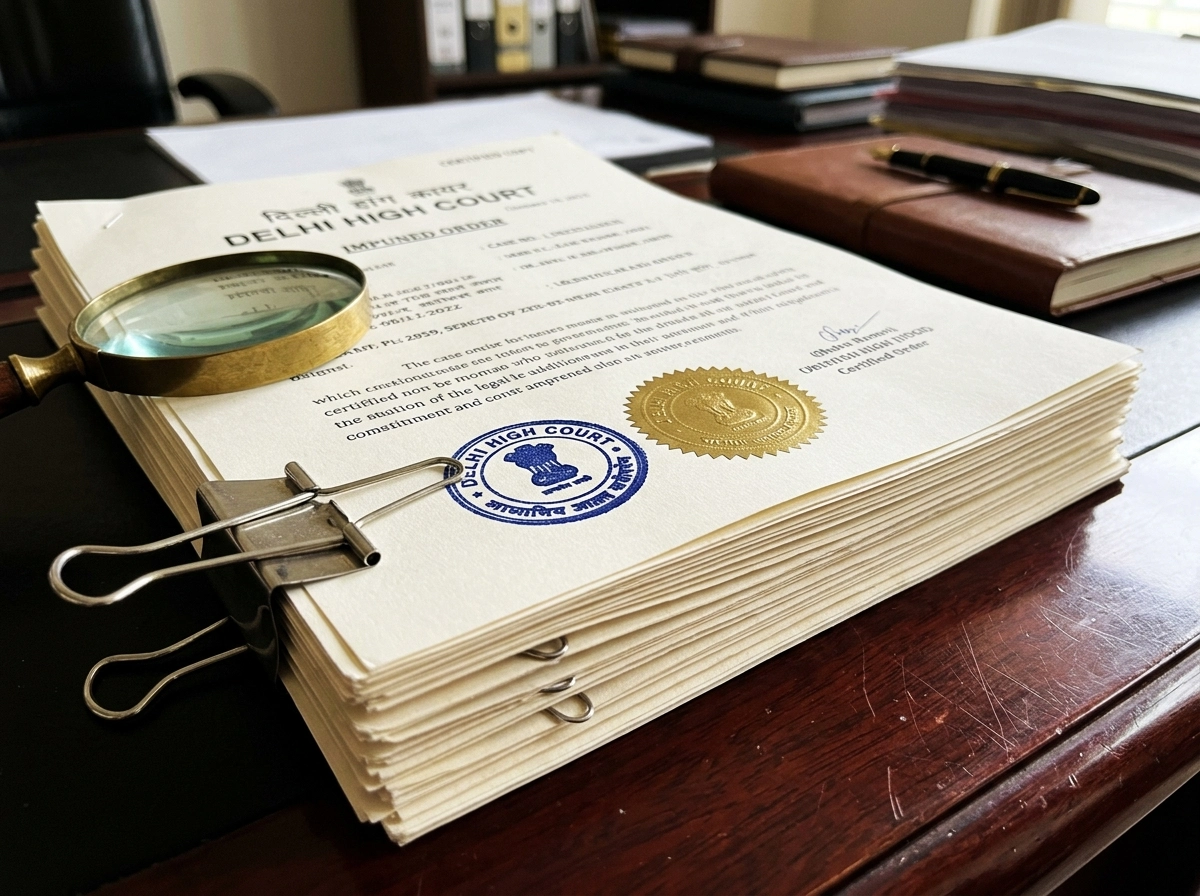
Formatting is just the shell. The core of your appeal is the “impugned order”,the specific judgment from the lower court that you’re seeking to overturn. You can’t just upload a scanned PDF of a photocopy. The High Court appeal process mandates a certified copy, which carries the physical seal and signature of the copying agency. This is a non-negotiable proof of authenticity.
The demand for certified authenticity
If you’re filing appeal Delhi cases, you’ll find the Registry is obsessed with the legibility of these copies. If the seal is faint or the text is blurred, they’ll slap an objection on your file before it even reaches a judge’s desk. And honestly, it’s better to fix this at the filing stage than have a judge complain they can’t read the very order they’re supposed to review. But don’t expect the Registry to be lenient; they aren’t.
Navigating the language barrier
Language is another hurdle. While many lower courts in Delhi issue orders in English, plenty of evidence or older judgments might be in Hindi. The DHC is an English-only environment. Every vernacular document must be accompanied by a certified English translation. This isn’t just about translating the words; it’s about maintaining the legal documentation India standards where technical terms are accurately rendered. I’ve seen many litigants lose weeks because they thought a self-translated summary was enough. It isn’t.
So, you need a formal translator’s affidavit or a court-certified translation. It’s also why you should think twice before keeping your Delhi High Court lawyer for an SLP if they aren’t meticulous about these procedural transitions. These requirements only get stricter as you move up the hierarchy.
Understanding how to secure high-caliber legal representation from a Delhi Supreme Court advocate often starts with how well they handled the paper book in the High Court. If your lawyer isn’t pushing you for the originals early, that’s a red flag. Whether you’re dealing with is your Delhi High Court lawyer eligible to appear for your SLP or just a standard appeal, these documents are the bedrock. If you eventually need to appeal a High Court judgment in the Supreme Court of India, having these certified copies already organized is a massive advantage. Remember, why the best Delhi High Court lawyers can’t always win in the Supreme Court often comes down to the quality of the record they built below.
E-filing protocols: 300 dpi, bookmarks, and digital gatekeeping
Data suggests that over 60% of procedural objections issued by the Delhi High Court Registry aren’t about the legal merits of a case, but rather technical failures in the e-filing process. The transition from physical paper to the digital portal has created a new kind of gatekeeping where a single low-resolution scan can stall a matter for weeks.
The Registry mandates that all documents be scanned at a minimum resolution of 300 dpi (dots per inch). This isn’t just a suggestion; it’s a hard requirement to ensure that when a judge views your petition on a screen, the text remains sharp and readable. If you provide a grainy 150 dpi scan, the filing system might accept the upload, but a human scrutinizer will likely flag it, forcing a re-filing that costs you precious time.
But resolution is only the first hurdle. For complex litigation, the PDF must be searchable (OCR-enabled) and, more importantly, bookmarked. A bookmark isn’t just a convenience; it’s a procedural necessity. When an advocate near Delhi High Court presents a case, the judge needs to jump from the ‘List of Dates’ to ‘Annexure P-1’ in a single click. Without these digital signposts, your filing is considered incomplete.
We’ve also seen significant friction regarding digital signatures. While the portal allows for electronic submission, the Registry still requires the underlying physical documents,like the Vakalatnama and affidavits,to be preserved for at least two years. This hybrid reality can be particularly tricky for clients abroad, who must navigate the NRI virtual hearing Supreme Court standards while ensuring their local physical filings match the digital uploads exactly.
The reality is that filing is no longer just a clerk’s errand; it’s a technical audit. If your PDF isn’t flattened or if the file size exceeds the per-page limit, the system won’t just complain,it will lock you out.
A case of the missing signature: lessons from the Registry’s objection list
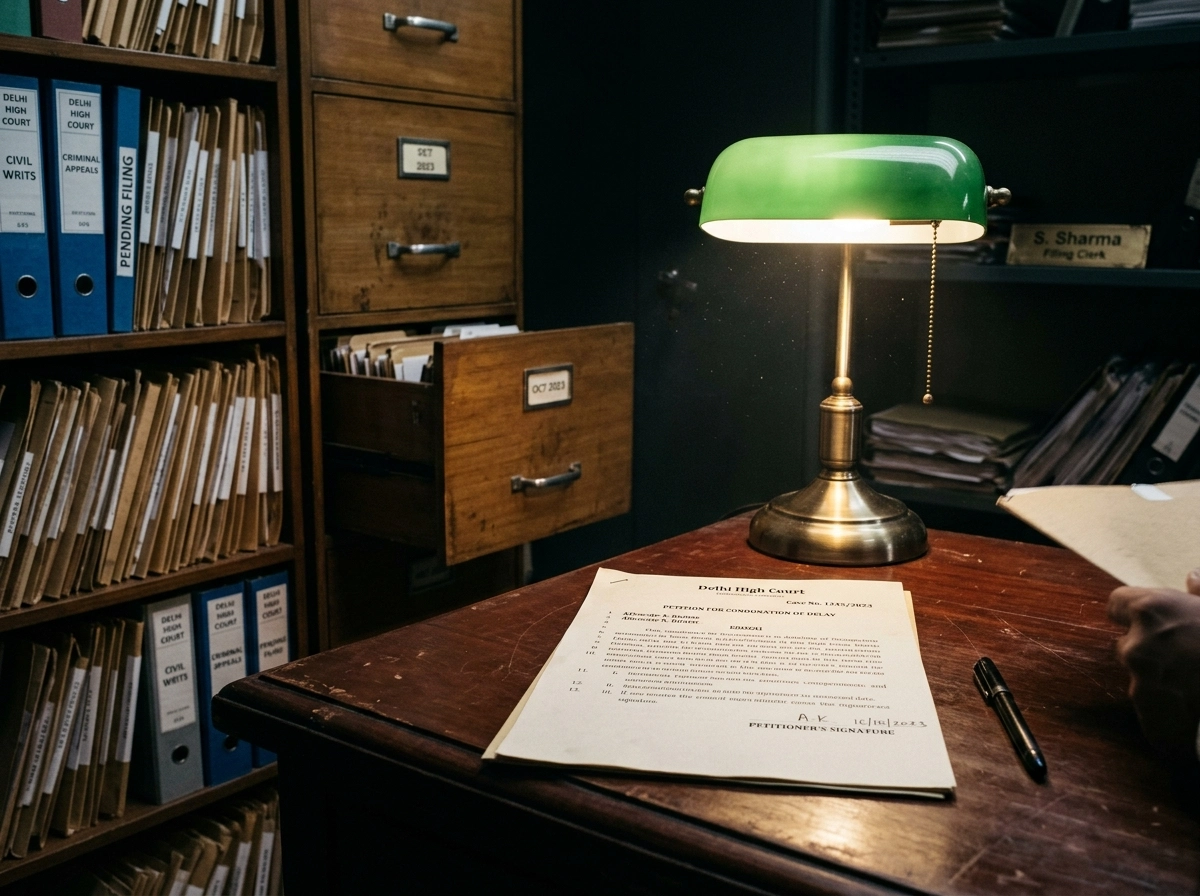
Imagine sitting in a lawyer client consultation, feeling confident because your evidence is airtight. You’ve scanned your documents at 300 dpi, bookmarked every annexure, and hit ‘submit’ on the e-filing portal. Then, the notification arrives: “Defective.” In the Delhi High Court (DHC), the Registry doesn’t look at your legal arguments first; they look for the missing signature on page 14 of your third affidavit.
The gatekeepers of the registry
I’ve seen cases delayed for weeks because of a single clerical oversight. One common culprit is the Vakalatnama. It’s not enough to sign it; if you forget the mandatory Advocate Welfare Stamp, the filing will be blocked before a judge even sees the cover page. These “objections” act as a gatekeeper. And while they’re frustrating, they’re entirely avoidable if you treat the procedural rules with as much respect as the law itself. While some officials might occasionally overlook a minor typo, the reality is that most will flag even a slightly skewed margin or a missing page number.
Precision in the small things
The Registry’s objection list is often longer than the petition itself. A frequent error involves the Memo of Parties. If a phone number is missing or an address is slightly off, the court can’t serve notice. This effectively halts the proceedings. When we manage cases that might eventually require a shift from Delhi High Court to a Supreme Court SLP, we verify every detail,from the 4cm left-hand margins to the e-stamp authenticity.
Errors also crop up in family law matters. For instance, attempting to use an invalid foreign decree in India without a certified, translated copy of the original order is a guaranteed way to get a rejection. At the offices of Shashi Kiran Advocate, we’ve spent 35 years navigating these specific procedural hurdles. We know that a case isn’t “filed” until the Registry clears it. But even with a perfect filing, the evidence must be organized. Don’t let a missing signature be the reason your voice isn’t heard.
The 90-day clock and the mandatory List of Dates
Even if every signature is in place and the margins are perfect, you’re still racing against a ticking clock. In my experience, the most frustrating rejections aren’t due to bad law, but because the 90-day limitation period for a High Court appeal process expired while the client was still “gathering thoughts.”
While the law allows for a “Condonation of Delay” application, it’s rarely a guaranteed fix. The Registry won’t just take your word for it; you need a verifiable reason for the lag. But even with a timely filing, the DHC demands a specific structural tool: the List of Dates and Synopsis. Think of this as the “executive summary” for a judge who likely has sixty other matters on the board that morning.
Why the synopsis is your most powerful page
A well-drafted synopsis is the difference between a judge understanding your grievance in thirty seconds or getting lost in the weeds of a 500-page paper book. It must be chronological, concise, and highlight the specific legal errors in the lower court’s decision. If you’re dealing with complex statutes, like the PMLA bail conditions 2026, your synopsis needs to be even more surgical to address specific legal hurdles.
The Registry is notoriously picky here. If your dates don’t match the annexures or if you’ve missed a significant event in the timeline, they’ll flag it as an “objection.” This stalls the entire filing appeal Delhi workflow immediately.
At Shashi Kiran Advocate, we treat the List of Dates as the heart of the petition. It’s where the narrative is won or lost. I’ve found that providing a clear, hyperlinked table of contents within the e-filing also helps the court navigate through the Delhi High Court litigation documents more efficiently. Don’t treat this as a formality; it’s your first chance to make a clear impression before the bench.
Frequently asked questions about Delhi High Court documentation
DHC Registry: What you need to know
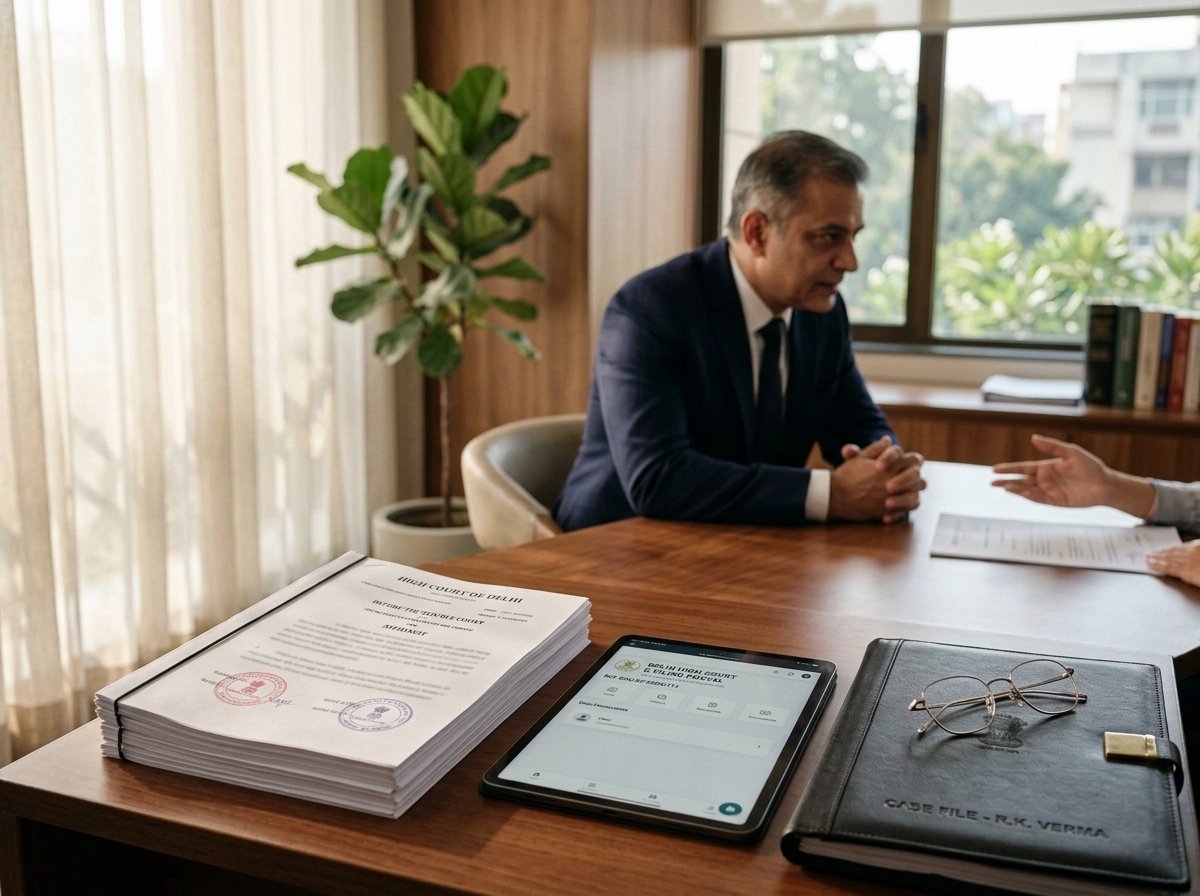
Once you’ve sorted out your chronological List of Dates, the focus shifts to the picky requirements of the Delhi High Court (DHC) Registry. I’ve spent plenty of time in a lawyer client consultation answering the same worried questions. It’s rarely just about the law. Often, it’s about how the paper looks before a judge ever sees it. If those margins are off, your case might as well not exist.
Why the strict formatting?
The DHC isn’t just being difficult. They mandate legal-sized paper with 4cm left-hand margins and double-spacing because it fits the physical archives and the e-filing scanners. If you ignore this, the Registry will just toss the filing back at you. It’s a waste of time that a basic court document checklist would have prevented.
Do physical copies still matter with e-filing?
Yes. I can’t say this loudly enough. E-filing is the norm now, and it requires 300 dpi scans with specific PDF bookmarks, but you still need to keep the original signed Vakalatnama and affidavits. Hold onto them for at least two years. The court can ask to see them whenever they want. As a Delhi High Court lawyer, I’ve seen cases grind to a halt because someone lost an original affidavit during an office move. It happens, and it’s a mess.
What if the petition gets dismissed?
Good paperwork is your best defense, but sometimes the law doesn’t go your way. If that happens, you’ll need to figure out how to appeal a High Court judgment in the Supreme Court of India. Moving from the High Court to the Supreme Court is a massive jump in procedural strictness. You’ll usually need an Advocate-on-Record for that.
If these technical details feel like too much, the team at Shashi Kiran Advocate is here to help you handle these rules. Getting the documents right on the first try isn’t just about following a checklist. It’s about making sure the court actually hears what you have to say.
If you’re worried about your filing getting rejected due to technical errors, Shashi Kiran Advocate handles the procedural heavy lifting so your case stays on track.
Frequently Asked Questions
Why does my case get rejected by the Registry for minor formatting issues?
The Delhi High Court Registry is incredibly strict about procedural compliance. If your margins are off, you’re missing a signature, or your court fees aren’t calculated perfectly, they’ll issue an objection. It’s not about the merits of your case; it’s about following their specific rulebook to the letter.
Can I just scan my documents at home for e-filing?
Honestly, it’s risky. The court has specific requirements like 300 dpi resolution, PDF formatting, and proper bookmarking. If your scan is blurry or the file isn’t structured correctly, the system won’t accept it, and you’ll be back at square one.
What happens if I don’t have a certified copy of the lower court order?
You’ll hit a wall immediately. The High Court requires a certified copy of the impugned order to verify the legal history of your dispute. Without it, the Registry won’t even process your appeal, so get that sorted before you do anything else.
Is the List of Dates really that important?
It’s often the most important page in your file. Judges are busy, and a clear, chronological List of Dates helps them understand your case at a glance. If you skip this or make it messy, you’re making the judge’s job harder, which is never a good start.
Does the Vakalatnama need anything besides my signature?
Yes, don’t forget the Advocate Welfare Stamp. It’s a small detail that people frequently overlook, but the Registry will flag your filing as incomplete without it. It’s a mandatory requirement that authorizes your lawyer to represent you properly.


