

The high bar of extraordinary jurisdiction

Why discretion is the ultimate gatekeeper
Imagine standing before a bench at the Delhi High Court, prepared to re-litigate every factual error from a lower tribunal, only to have the judge dismiss the matter in sixty seconds. This happens daily. Most litigants treat a writ as a “Level 2” appeal, but the reality is far more punishing. Article 226 is an extraordinary remedy, meaning the court has the power to intervene, but absolutely no obligation to do so.
Judges in this forum operate under a strict code of self-imposed restraint. They aren’t there to fix every perceived injustice; they’re there to correct jurisdictional errors and constitutional violations. If a writ petition lawyer fails to demonstrate that no other “alternative efficacious remedy” exists, the court will likely point the petitioner back toward the statutory hierarchy. It’s a high-stakes filter that catches anyone trying to bypass the standard legal process without a valid constitutional reason.
The Delhi High Court (DHC) serves as a specialized hub, often exercising original jurisdiction in high-value commercial matters. This environment demands more than just a generalist’s touch. A seasoned Delhi High Court lawyer understands that the registry’s scrutiny is the first real hurdle. Minor formatting errors or a missing ‘List of Dates and Events’ aren’t just clerical nuisances; they’re grounds for ‘office objections’ that can stall an urgent stay application for weeks.
And then there’s the issue of ‘fact-loading.’ A common mistake is stuffing an article 226 petition delhi with disputed facts that require trial-style evidence. The DHC generally refuses to act as a fact-finding body. If your case relies on proving a witness lied rather than showing a procedural lapse, you’re in the wrong forum. A judicial review expert shifts the focus from ‘what happened’ to ‘why the legal principle was violated.’ Honestly, even the most polished petition can face a “not inclined” from the bench if the underlying facts are too tangled for a summary proceeding. Success requires anchoring the plea to a substantial question of law from the very first paragraph.
Why trial court logic fails at Sher Shah Road
The fundamental shift from evidence to legality
If you walk into the Delhi High Court expecting the same procedural rhythm as a district court trial, you’re in for a rough afternoon. In the lower courts, litigation is a battle of evidence. It’s about who said what, which document was signed, and how a witness held up under pressure. But when you move your case to Sher Shah Road, that logic often falls flat. The High Court isn’t a “super trial court.” It doesn’t want to hear your grievances about a witness’s memory or a missing receipt unless those facts point to a systemic failure of law.
When a civil litigation attorney delhi tries to re-argue the minutiae of a property dispute under Article 226, the Bench usually loses interest quickly. Why? Because a writ petition is a constitutional tool, not a second chance at a trial. You’ve got to understand the shift from “what happened” to “how the law was applied.” Most litigants fail because they “fact-load” their petitions. They bury the legal violation under five hundred pages of background noise that doesn’t actually matter to a judge focused on jurisdictional errors.
Why judicial discretion changes the game
An experienced delhi high court lawyer avoids the scattergun approach by anchoring every argument in judicial review principles. The court’s power under Article 226 of the Indian Constitution is discretionary. This means the judge can simply refuse to hear you if they feel you have an “alternative efficacious remedy”,like going back to a lower tribunal. If your high court legal defense isn’t framed to show why those other remedies are useless, your case might die before it even gets a notice issued.
It’s a different kind of pressure. You aren’t just fighting the opposing party; you’re often fighting the State. Success here depends on surgical precision in drafting. One minor slip-up in the “List of Dates” or a vague prayer clause, and you’re sent back to the registry for weeks of corrections. Honestly, the biggest mistake I see is people treating the High Court like a louder version of a district court. It isn’t. It’s a different world entirely where the process is as important as the law itself.
When a ‘perfect’ case gets dismissed in the registry
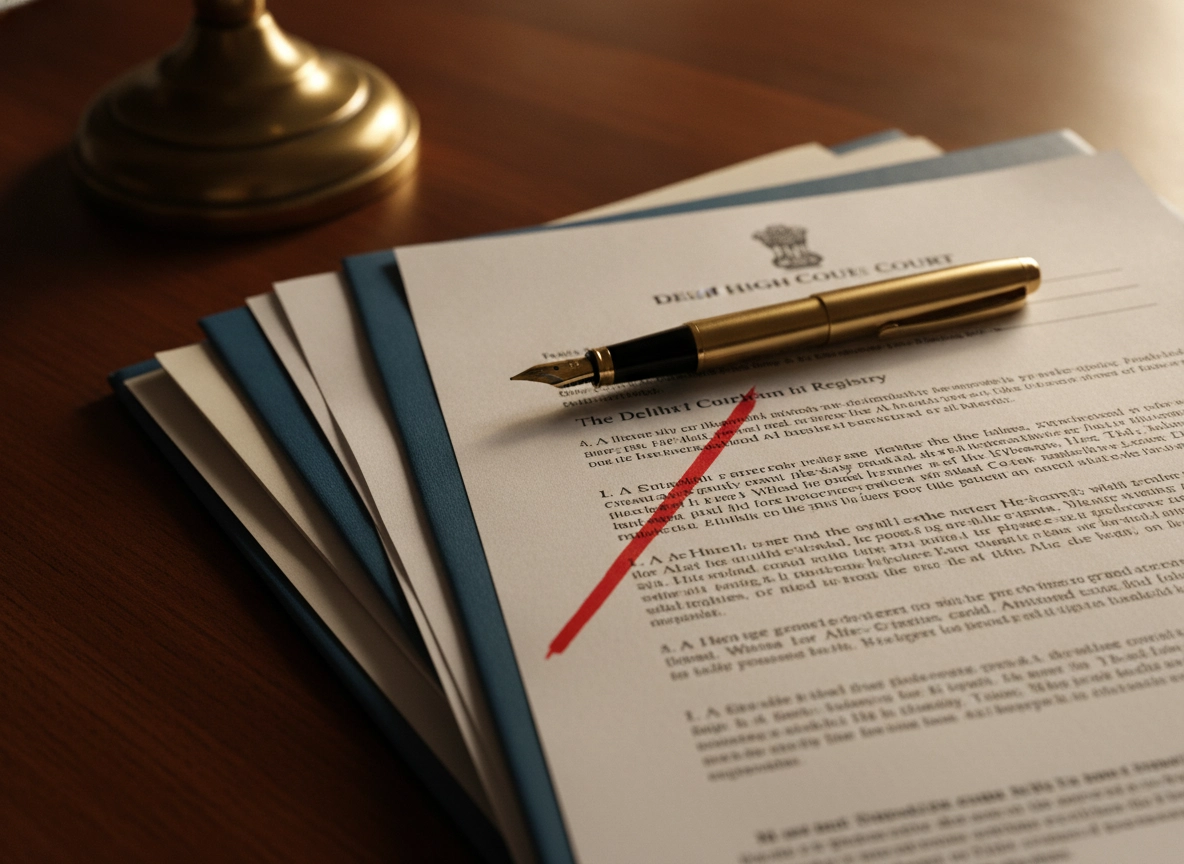
Picture a business owner waking up to find their bank accounts frozen by a sudden administrative order. On paper, it’s a slam dunk. The authorities clearly overstepped. But when that petition hits the Delhi High Court, it might never actually reach a judge. It gets stuck. For three days, it sits in the ‘registry’ because of a tiny formatting error in the index or the wrong paper size. On Sher Shah Road, these aren’t just minor hiccups. They’re the gatekeepers.
The invisible wall of office objections
Most people think the real fight happens in front of a judge, but many urgent cases die a quiet death during registry scrutiny. The Delhi High Court is strict—much stricter than trial courts. If your pagination is off by one page or your ‘List of Dates and Events’ isn’t specific enough, you’ll get hit with ‘office objections.’ It’s a filter, not just red tape. When you’re desperate for a stay order and interim relief, every hour spent fixing typos is an hour your money stays frozen.
Why specialized legal advocacy matters
You need more than a lawyer who knows the law. You need someone who speaks the court’s local ‘grammar.’ That’s why specialized legal advocacy is so important. Experienced lawyers know these judges have no patience for ‘fact-loading’ a writ. They want the constitutional violation front and center. But first, your team has to clear the technical arguments and court procedures the registry insists on.
If you’re hiring a lawyer in delhi, find a specialist who obsesses over the filing as much as the argument. At Advocate Shashi Kiran’s chambers, we use a specific delhi legal system assistance approach to skip these delays. We make sure your case actually gets heard instead of dying in a clerk’s inbox.
The cost of failing to exhaust alternative remedies
Data from the Delhi High Court shows a harsh reality: nearly 60% of writ petitions get tossed out at the first hearing. It’s usually not a lack of merit. Instead, petitioners often skip ‘alternative efficacious remedies.’ Judges at Sher Shah Road treat Article 226 as an extraordinary power, not a shortcut for standard appeals. If there’s a statutory tribunal, use it. Many litigants rush for a quick fix, only to find themselves back at square one months later.
The doctrine of forum conveniens and why geography matters
A sound legal argument won’t save you if the court invokes forum conveniens. This happens when a dispute’s link to Delhi is too thin, even if the respondent has a local office. A Delhi High Court writ petition lawyer has to prove an ‘integral part’ of the conflict happened here. If the fight started in Mumbai and only the final notice landed in Delhi, the bench will likely decline. That’s why a judicial review expert nails down the jurisdictional framing before they even look at the facts.
Navigating the discretionary wall with specialized legal counsel
The High Court’s power is discretionary. They don’t have to hear your case. A specialized legal counsel knows that ‘fact-loading’ a petition is a death sentence; the focus has to stay on procedural illegality. If you plan on hiring supreme court advocate support later, a messy dismissal now can kill your future chances. You need to know if your delhi high court lawyer is eligible to appear for your slp early on. Strategy must be consistent from the start.
Moving a case to the top tier changes everything. The legal strategy change for the highest court is massive. You need a supreme court slp procedure that accounts for every remedy you might have bypassed. Whether it’s property or service matters, check if your representative has the right to argue in the supreme court. Without that, the case could collapse. Simply hiring a local delhi high court lawyer isn’t enough if they miss these long-term procedural traps.
How a specialist frames a ‘substantial question of law’

Jurisdiction is just the first hurdle. Most petitions die because they read like a trial court’s closing argument. I’ve seen plenty of litigants try a ‘fact-loading’ strategy, dumping hundreds of pages of emails and notes into the record. It’s a mistake. The Delhi High Court isn’t there to figure out if a witness lied. It’s there to decide if the state or a tribunal overstepped its legal bounds.
From facts to constitutional principles
When I draft an article 226 petition delhi, the goal isn’t to tell a sad story. You need to find a ‘substantial question of law.’ This means proving that the issue isn’t just about your specific case, but about a legal principle that was ignored. A Delhi High Court lawyer like Shashi Kiran knows the court’s time is limited. They look for jurisdictional rot, where an authority acted without power or ignored the law.
The mechanics of specialized advocacy
Effective advocacy isolates the procedural breakdown. Did the government department follow its own rules? Was natural justice tossed out? If you’re wondering do you need a different legal mind for your delhi high court case vs the supreme court, the answer is in how the lawyer anchors the argument. Trial lawyers fight over evidence. Specialists fight over the legality of the process.
Logic isn’t enough to win. The court might agree with you but still refuse to step in if the point isn’t ‘substantial’ enough for extraordinary jurisdiction. This is where the legal team Behind ASV Legal LLP and other high-stakes litigators earn their keep. They frame the problem so the court feels it has to answer it to prevent a mess.
Why the prayer clause is the most critical page
Your ‘prayer’, what you’re actually asking the judge to do, needs to be sharp. If you ask for too much, you look like you’re fishing. If you’re too vague, the judge will toss it for lack of clarity. This precision is why people ask which legal expertise handles the shift from delhi high court to a supreme court slp. You want the record clean from day one.
A win in the High Court is only half the battle. You need to know if your counsel is ready for the long haul. Ask if your Delhi High Court lawyer can file a Special Leave Petition before the final judgment arrives. It ensures your framing holds up even under Supreme Court scrutiny.
Moving from crisis to constitutional relief

Most litigants arrive at Sher Shah Road in a state of pure panic. They’ve been wronged by a government body or a lower tribunal, and they want the court to fix everything at once. But a crisis isn’t a legal strategy. Moving from a chaotic dispute to actual constitutional relief requires a total shift in mindset. You aren’t just looking for an advocate; you’re looking for a delhi high court writ petition lawyer who knows how to translate raw grievance into a “substantial question of law.”
It’s easy to get lost in the weeds of evidence. A standard civil litigation attorney delhi might try to win by overwhelming the judge with facts. That’s a mistake. The High Court doesn’t want to do the trial court’s job. It wants to know if the process was fair and if your rights were trampled. If you treat the writ like a second chance at a trial, you’ve already lost.
Securing a robust high court legal defense is about more than just filing papers. It’s about knowing when the court will likely push back and having a ready answer for why other remedies won’t work. Sometimes, the path doesn’t stop at the High Court. Understanding the legal costs of moving from Delhi High Court to the Supreme Court is a vital part of planning a long-term strategy.
At Shashi Kiran Advocate, we’ve seen that the difference between a dismissed petition and a notice being issued often comes down to the first three minutes of oral arguments. Don’t gamble with generalists when the stakes are constitutional. Reach out today for a consultation and let’s frame your case with the precision it deserves.
If you’re facing a complex legal hurdle at the Delhi High Court, Advocate Shashi Kiran provides the strategic guidance needed to navigate constitutional review. Reach out today for a consultation at +91-92121-97427.
Frequently Asked Questions
Can I just treat a writ petition like a regular court appeal?
Not at all. A writ petition isn’t an appeal where you re-argue facts; it’s a constitutional tool used to challenge the legality or process of a decision. If you treat it like a trial, you’ll likely find the court unwilling to hear your case.
Why does the registry reject so many petitions for minor errors?
The Delhi High Court has incredibly strict filing standards. If your pagination is off or you’re missing a required document like the ‘List of Dates and Events,’ the registry will flag it as an office objection. It’s frustrating, but these technicalities can stall your urgent matter for weeks.
Does the court always have to hear my case if my rights were violated?
Not necessarily. The court’s power under Article 226 is discretionary, meaning they don’t have to accept every case. If you haven’t exhausted other legal remedies or if your case is purely about disputed facts, they’ll often tell you to go elsewhere.
How does a specialist lawyer change the outcome of a writ?
A specialist knows how to pivot from ‘what happened’ to ‘why the law was broken.’ They strip away the noise and anchor your petition to a substantial question of law, which is what judges actually look for in constitutional review.


