

The mandatory gatekeeper of the Supreme Court
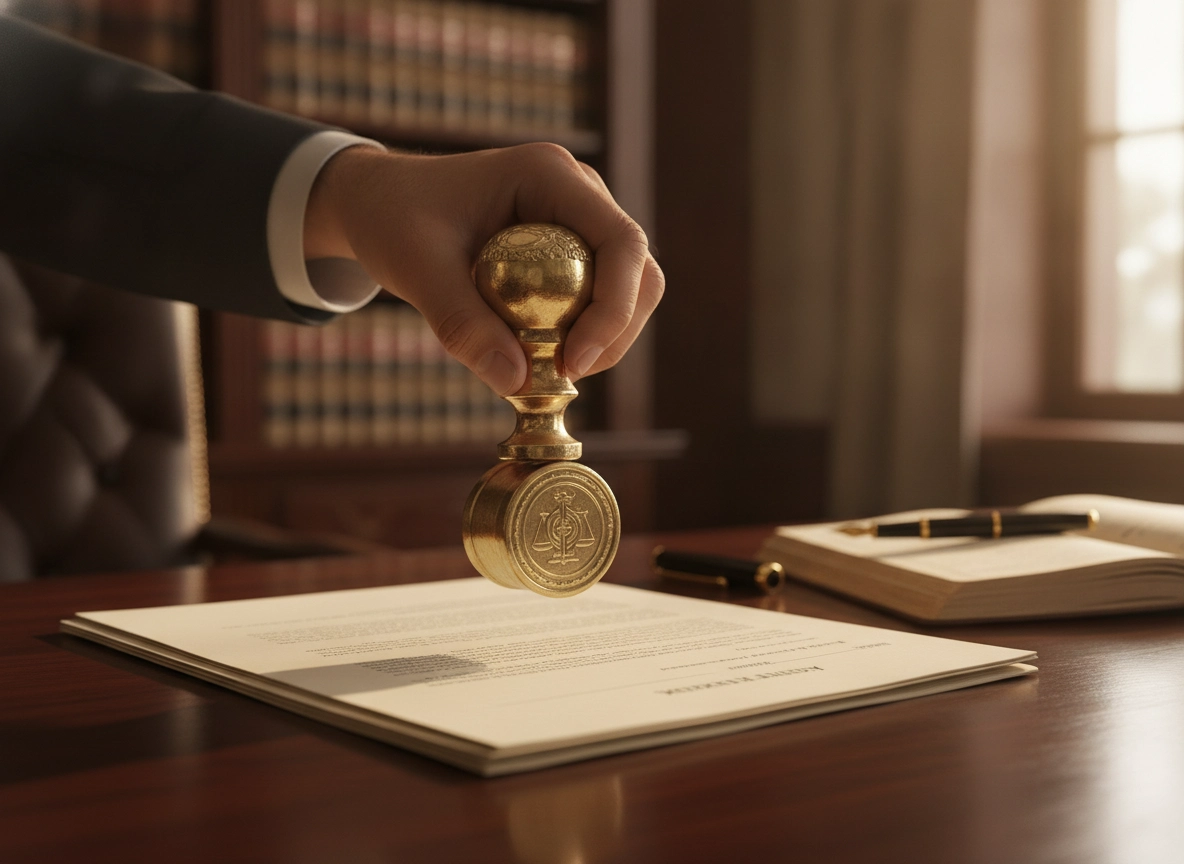
Imagine you’ve spent months prepping a Special Leave Petition (SLP) with your local lawyer, only to have the Supreme Court Registry toss it out before a judge even looks at it. It happens more often than you’d think. The reason? In the apex court, expertise isn’t the only thing that matters; your lawyer needs a specific title. Under Order IV of the Supreme Court Rules, 2013, only an Advocate on Record (AOR) is legally allowed to file documents or act on your behalf.
While a regular delhi high court lawyer can argue your case, they can’t sign a Vakalatnama for the Supreme Court. This gatekeeper system is more than just red tape. It exists to make sure every document hitting the highest court’s desk meets strict procedural standards. That’s why hiring a supreme court lawyer who is also an AOR is mandatory.
A specialized class of practitioners
So, what sets an AOR apart? The requirements are pretty intense. It isn’t just about how long you’ve been at the bar. An AOR needs at least four years of practice, plus a full year of training under a registered AOR. After that, they have to pass a tough four-paper exam that covers everything from professional ethics to complex drafting.
Even a Senior Advocate—the most prestigious title in the Indian legal system—can’t file a case directly. They have to be hired through an AOR. This keeps the roles and responsibilities clear and maintains court discipline. This division of labor ensures supreme court filing rules are followed to the letter. If you’re navigating this for the first time, you’ll see that the AOR is the essential bridge between you and the bench, a role that practitioners like Shashi Kiran Advocate have handled for decades.
Why your local lawyer cannot file your SLP alone
Litigants often face a specific procedural hurdle when moving cases to the apex court. A local counsel may have litigated aggressively in the High Court, but the transition to Tilak Marg introduces a hard procedural ceiling. Trial brilliance does not translate to filing authority. When challenging a judgment via a Special Leave Petition (SLP), the rules of engagement shift.
The constitutional mandate of Article 145
This restriction is not a matter of local custom; it is a constitutional mandate. Under Article 145, the Supreme Court holds the authority to frame rules for regulating Supreme Court practice and procedure. This led to the Supreme Court Rules, 2013, specifically Order IV, which designates the Advocate-on-Record (AOR) in Supreme Court of India as the only class of practitioner permitted to “act” for a party.
While the Advocates Act, 1961, grants a general right to practice, that right is subordinate to the specific rules of the Supreme Court. A local lawyer cannot sign the Vakalatnama. They are barred from filing any document in the Registry. They may argue with the court’s permission, but the procedural “acting” remains off-limits. This framework guarantees that the Registry interacts only with a specialized group familiar with the SLP filing process. It is a matter of institutional responsibility for the record.
Why acting matters more than arguing
The distinction between “acting” (filing and processing) and “pleading” (arguing) is often overlooked. Even those with the authority of a supreme court senior advocate in Indian law cannot file a case directly; they require an AOR for the procedural heavy lifting. At Shashi Kiran Advocate, we frequently observe petitions rejected because an unauthorized person attempted to navigate the advocate on record process.
To understand the process of hiring a skilled supreme court advocate, one must recognize the AOR as the primary procedural filter. Whether choosing a top supreme court advocate in Delhi for 2026 or searching for an advocate in supreme court new delhi, the requirement is absolute. The Registry expects a sharp supreme court advocate in Delhi for immediate legal action to certify that the petition complies with all technical norms.
Avoiding procedural pitfalls
Extensive experience in Delhi High Court litigation does not translate to Supreme Court procedural compliance. Securing high-caliber legal representation from a Delhi supreme court advocate necessitates an AOR capable of meeting top legal representation in Delhi’s supreme court for 2026 benchmarks. It is a sound right supreme court advocate in Delhi for your 2025 litigation strategy to ensure an advocate supreme court delhi manages the filing petitions in India process. Simple errors can sink a strong case; while your local lawyer provides the factual foundation, the AOR must own the procedure.
The high cost of a procedural defect
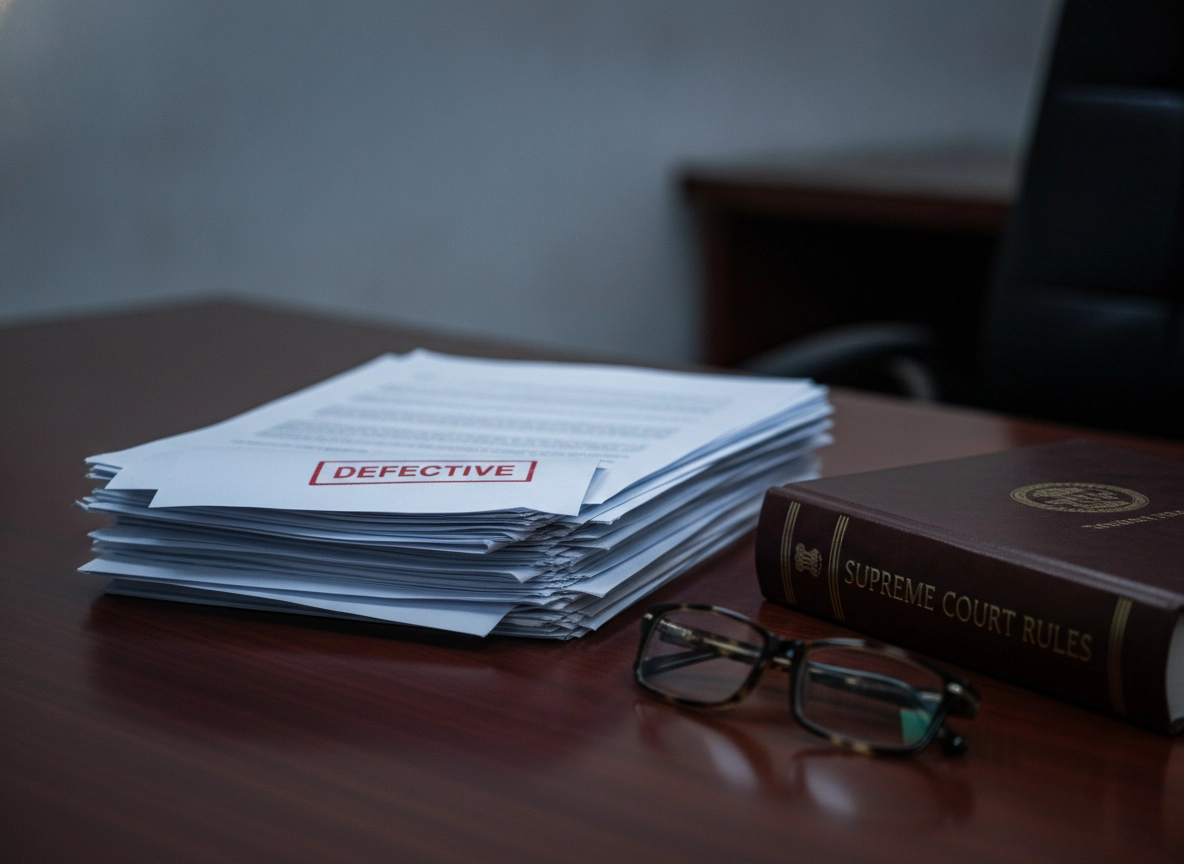
Picture this. You’ve traveled over a thousand kilometers to Delhi with a ‘bulletproof’ Special Leave Petition. It’s the very last day of the limitation period. You walk into the Tilak Marg complex feeling confident, but the filing counter hands your papers back in minutes. Why? A missing clerk’s certificate or a font size that doesn’t match the Supreme Court’s strict protocol.
Your case is dead because of a margin width. It sounds ridiculous, but that’s how the apex court works. Without an AOR’s signature and their official stamp, the Registry won’t even read your arguments. I’ve watched people lose their entire right to appeal just because they tried to cut corners on legal representation Delhi rules.
Trying to save on supreme court advocate fees usually backfires. A ‘defective’ filing costs way more in the long run. You’ll spend days ‘curing’ errors while the clock ticks. If your time runs out during that scramble, you’re stuck filing a ‘Condonation of Delay’ application. That’s more paperwork, more money, and more stress.
Why gamble? It makes more sense to find the right supreme court advocate in delhi for your case who knows where these procedural traps are hidden. At Shashi Kiran Advocate, we’ve seen plenty of matters nearly ruined by these legal procedural delays.
Sure, you might get a sympathetic judge who overlooks a tiny delay. But the Registry? They aren’t that nice. You need a supreme court advocate delhi who follows the Supreme Court litigation guide to the letter. The law is the destination, but the procedure is the gatekeeper. Don’t get locked out.
What it actually takes to become an AOR
The passing rate for the Advocate on Record examination often hovers around a mere 15% to 20%, a statistic that underscores the difficulty of joining this specialized cadre. It’s not enough to simply be a skilled lawyer; the Supreme Court demands a specific level of procedural mastery that a general practitioner rarely encounters. To even qualify for the exam, an advocate must have at least four years of practice followed by one year of mandatory training under a registered AOR with at least ten years of standing.
This rigorous advocate on record process is essentially a quality control mechanism for the nation’s highest court. During that year of training, the candidate learns the nuances of the Supreme Court Rules 2013, which are significantly different from High Court procedures. If you are looking to find Supreme Court advocate Delhi services, you’re essentially looking for someone who has survived this gauntlet.
The four-paper hurdle
The examination itself is a grueling four-day affair. Candidates are tested on:
- Practice and Procedure of the Supreme Court
- Drafting (SLPs, Writ Petitions, and Applications)
- Professional Ethics
- Leading Cases (landmark judgments)
The Drafting paper is where most candidates stumble. It’s one thing to argue a point of law, but another entirely to draft a petition that meets the Registry’s exacting standards. This is why when hiring a Delhi advocate with AOR status, you’re paying for their ability to navigate these technicalities. You can check the official SCAORA INDIA directory to verify an advocate’s credentials and standing.
The 16km rule and accountability
Beyond the exam, an AOR must maintain a functional office within a 16km radius of the Supreme Court. They are also required to employ a registered clerk. This isn’t just about geography; it’s about physical accountability to the Registry. If a document is missing or a defect is flagged, the AOR must be reachable and available to rectify it immediately.
While Supreme Court advocate Delhi fees might seem higher than those of local counsel, the specialized infrastructure they maintain ensures your case doesn’t die in the filing room. Honestly, the risk of a technical dismissal far outweighs the cost of professional representation. When working with a seasoned professional like Shashi Kiran Advocate, you benefit from decades of experience navigating these exact advocate on record requirements.
Senior Advocates vs. AORs: who does what?

Many litigants walk into my office believing a Senior Advocate is a one-stop-shop for their legal troubles. They’re wrong. They confuse fame with function. A Senior Advocate is a specialist in oral persuasion, but they are legally prohibited from filing a single sheet of paper with the Registry. If you hire a big name and expect them to handle the paperwork, you’re setting yourself up for a procedural disaster.
The legal wall between roles
The divide is absolute. A Senior Advocate cannot accept instructions directly from a client. They cannot file a Vakalatnama. They cannot even appear in court unless they’re accompanied or “briefed” by an Advocate on Record. If you try to bypass this, the Court simply won’t hear you. The SCAORA INDIA guidelines maintain this discipline to ensure the Registry isn’t overwhelmed by non-specialized filings.
The AOR handles the heavy lifting of Supreme Court practice and procedure. They draft the petition, ensure it complies with every obscure rule, and take personal responsibility for its accuracy. While you might search for the top 10 Supreme Court advocates Delhi to handle a final argument, that work is useless if the AOR hasn’t built a flawless procedural foundation first.
Why the collaboration matters
Think of it as a surgery. The Senior Advocate is the lead surgeon who performs the most difficult cut. The AOR is the chief of the surgical unit who manages the entire theatre, the staff, and the pre-op prep. You can’t have the surgery without both. Choosing the right Supreme Court advocate in Delhi for your needs requires recognizing this two-tier system. Admittedly, for minor procedural matters, a skilled AOR might handle the entire brief alone, but for high-stakes litigation, this partnership is the only way the system functions. Don’t let anyone tell you otherwise.
Essential FAQ for Supreme Court litigants
Once you’ve grasped the synergy between Senior Advocates and Advocates-on-Record, the practical ‘how-to’ of litigation usually takes center stage. You’re likely wondering about the ticking clock and the specific logistics of the Delhi legal ecosystem. It’s a lot to navigate, especially if you’re coming from a different state and aren’t familiar with the local quirks of the Registry.
How long do I have to file my case?
The most common deadline people ask about is the 90-day window for filing a Special Leave Petition (SLP) against a High Court judgment. But here’s the thing: that clock starts from the date of the judgment, not from when you finally get the certified copy in your hands. While you can apply for a ‘condonation of delay’ if you miss it, the Court isn’t always lenient. If your delay isn’t backed by a solid reason, you risk your case being dismissed before the merits are even discussed.
Does my advocate have to be based in Delhi?
Technically, yes. Under the Supreme Court filing rules, an AOR must maintain an office within a 16-kilometer radius of the Court. This isn’t just bureaucratic red tape; it’s so the Registry can serve notices or documents at a moment’s notice. While your local counsel handles the groundwork back home, you’ll need to collaborate with an Advocate in Delhi NCR who understands these localized procedural nuances and can be physically present when the Registry raises an objection.
What are the actual costs involved?
Litigation costs aren’t just about lawyer fees. You’ve got court fees, which vary based on the nature of the petition, and processing charges for the paper books. Then there’s the professional fee for the AOR and, if the case is complex, the fee for a Senior Advocate. It’s always better to ask for a clear breakdown upfront. Most experienced practitioners will give you a transparent estimate that covers filing, drafting, and appearances.
Can I change my AOR mid-case?
Yes, you can, but it’s not as simple as just hiring someone else. You’ll need a ‘No Objection Certificate’ (NOC) from your current AOR. If there are unpaid dues, things can get sticky. It’s why choosing the right partner from the start is so vital for a Supreme Court litigation guide to be effective. And don’t forget,the Registry is pedantic. A single missing signature or a font that’s slightly off can lead to a ‘defect’ notification, pushing your hearing back by weeks.
Escalation: when your High Court petition fails

When the High Court delivers a judgment that doesn’t go your way, the sting of defeat is often followed by a rush of procedural panic. You typically have a 90-day window to approach the Supreme Court via a Special Leave Petition (SLP). But here’s the reality: the strategy that worked (or didn’t) at the state level won’t suffice here. The apex court isn’t a court of error correction for every minor fact; it’s a court of law and constitutional significance.
I’ve observed that the biggest hurdle for litigants isn’t the law itself, but the Supreme Court registry protocol which governs how cases are accepted. If your petition has even minor formatting errors or lacks the specific certificate of an Advocate on Record, it will be “curated” or returned with defects. This is why hiring a Delhi advocate who is specifically designated as an AOR is the only way to ensure your matter actually reaches the bench.
At Shashi Kiran’s chambers, we treat these escalations as a fresh battlefield. With 35 years of experience in filing petitions in India, we know that an SLP requires a surgical focus on the “substantial question of law” that the High Court may have overlooked. Admittedly, even the most well-drafted petition faces immense scrutiny, and success at the admission stage is never a given. Don’t let a local procedural oversight kill your final chance at justice. If you’re facing a dismissal, reach out today for a consultation or call +91-92121-97427 to discuss your next steps. The move to Delhi is a leap, but it doesn’t have to be a blind one.
If you’re struggling with Supreme Court filing protocols, Advocate provides the specialized guidance you need to navigate these requirements. Reach out today for a consultation at +91-92121-97427.
Frequently Asked Questions About AORs
Can my local lawyer represent me in the Supreme Court?
Not directly. While they can assist with your case, they can’t file any documents or appear as the lead counsel of record. You’ll need an Advocate on Record to handle the formal filings and bridge the gap between your lawyer and the Supreme Court registry.
Why does the Supreme Court require an Advocate on Record?
It’s all about maintaining institutional discipline. The court needs a point person who is specifically trained in its unique procedural rules to ensure every petition meets the high standards required for apex court litigation.
Does an AOR have to be based in Delhi?
They don’t have to live in Delhi, but they’re legally required to maintain an office within 16 kilometers of the Supreme Court. This ensures they’re always accessible for court-related matters and filings.
What happens if my filing doesn’t follow the AOR protocol?
The Registry will almost certainly reject it. You’ll waste valuable time and money dealing with procedural defects that could’ve been avoided by having an AOR manage the filing from the start.
Is it worth hiring a Senior Advocate if I already have an AOR?
Honestly, they serve different roles. The AOR manages the procedural side, while a Senior Advocate is brought in for their specialized expertise in arguing complex points of law. They work as a team to represent you effectively.


