

The administrative wall between the Supreme Court and Delhi High Court

Walk from the Delhi High Court on Sher Shah Road toward the Supreme Court on Tilak Marg, and you’ve covered less than a kilometer. But for a lawyer, that short walk represents a massive shift in procedural reality. Most clients assume that because the courts are neighbors, the Delhi High Court vs Supreme Court distinction is just a matter of floor numbers. They think their Delhi High Court lawyer can simply carry the same file across the street and start arguing. That’s a mistake that often leads to immediate registry objections.
the myth of proximity
The Supreme Court operates under a unique ‘Advocate on Record’ (AOR) system. It’s a closed-loop administrative framework where only an AOR can sign a Vakalatnama or file documents. You might have the most brilliant trial lawyer in the country, but in the eyes of the Apex Court registry, they don’t exist for filing purposes. It’s a “sui generis” system. Understanding the Advocate on Record process is the first hurdle for any litigant moving upward from the High Court.
In contrast, the Delhi High Court doesn’t have an AOR mandate, yet it’s far from a free-for-all. It has its own legal filing procedure, strict e-filing protocols, and local bar norms that can be just as punishing. Dealing with Delhi High Court litigation requires a focus on evidence and factual records that the Supreme Court often bypasses. In our work at Shashi Kiran Advocate, we’ve seen how often cases stall because someone tried to apply High Court logic to a Supreme Court Special Leave Petition.
And it isn’t just about who signs the papers. The administrative wall is built on how evidence is treated. While the High Court is the last stop for a deep dive into facts, the Supreme Court is looking for constitutional errors. If you’re looking for an appellate court lawyer Delhi, you have to recognize that these are two different disciplines. One is a sprint through procedural hurdles; the other is a marathon of legal interpretation.
Q: Why can’t any Supreme Court advocate file papers independently?
The physical proximity of the Delhi High Court to the Supreme Court suggests a procedural overlap that doesn’t actually exist. You might think a lawyer can just walk across the street and file papers. They can’t. The Supreme Court Rules, 2013, establish a ‘sui generis’ system. It’s a closed loop. Under these rules, even a veteran Supreme Court advocate or a designated Senior Advocate lacks the standing to file a case independently.
The unique barrier of the advocate on record
In the apex court, the advocate on record process is the mandatory gateway for litigation. An AOR isn’t just any lawyer. They’re a practitioner who has cleared a brutal examination run by the court itself. To even sit for it, they need four years of practice and a year of training under a senior AOR. This system makes sure that the person responsible for the Supreme Court filing rules actually understands the registry’s specific administrative quirks.
But why such a gatekeeper? The sheer volume of Special Leave Petition process filings is staggering. If every lawyer in the country could file directly, the registry would likely buckle under procedural mistakes. When hiring a supreme court advocate in india, you’re usually engaging a two-part machine: the AOR for the paperwork and the arguing counsel for the courtroom.
The gap between arguing and filing
Clients are often blindsided when they realize their Delhi High Court lawyer—the one who knows the case inside out—is barred from filing the appeal. While they can argue the matter if the court allows it, the petition itself must carry an AOR’s signature. This setup often triggers concerns about whether legal costs double when moving from delhi high court to the supreme court. Costs do climb. However, the AOR is there to stop legal filing errors from killing a case before it reaches a judge’s desk.
If you’re seeking high-caliber legal representation from a delhi supreme court advocate, you must check if they have the structural capacity to handle both the law and the registry. Finding a sharp supreme court advocate in delhi means finding a firm that integrates these Advocate on Record requirements. It isn’t a lack of talent in other advocates. It’s a regulatory wall. At Shashi Kiran Advocate, we navigate this divide daily.
Ultimately, choosing a top supreme court advocate in delhi requires understanding that the AOR is the primary point of accountability for the court. This guarantees that every petition, whether it’s a Supreme Court transfer petition or a complex writ, meets the highest standard of procedural accuracy. You can reach out today for a consultation to see how these specific rules impact your litigation strategy.
The local counsel reality in Delhi High Court jurisdiction

Having a big-name Supreme Court pro doesn’t mean they know the Delhi High Court’s plumbing. Section 34 of the Advocates Act lets every High Court write its own rulebook, and the DHC takes that liberty seriously. This isn’t some abstract legal theory. It’s the gritty reality of e-filing protocols, how the Registry handles caveats, and local bar quirks that don’t exist across the street at the SC. An appellate court lawyer Delhi usually keeps a local crew on standby just to survive these procedural shifts.
Section 34 and local procedural norms
I’ve watched solid constitutional arguments die because of small mistakes that sink big cases in the Delhi High Court. The Supreme Court wants ‘substantial questions of law,’ but the High Court is a fistfight over facts, evidence, and cross-examinations. If your team misses a DHC e-filing mandate or can’t clear registry objections on the fly, your case will rot in ‘defective’ status for weeks. The administrative rhythm matters as much as the law itself.
Proximity isn’t the same as procedural overlap. It’s a trap. The best Delhi High Court lawyers can’t always win in the Supreme Court without a total strategy overhaul. On the flip side, an SC specialist often trips over the fact-heavy demands of being a Delhi High Court lawyer. That’s why people hunt for a top 10 supreme court advocates delhi list specifically looking for firms with a dedicated High Court desk.
You need to know what to ask your lawyer before moving an appeal from Delhi High Court to the Supreme Court. Being a master of one court doesn’t mean squat in the other. How to file a case in Supreme Court of India is a different beast than DHC rules. At the office of Shashi Kiran Advocate, we don’t just talk law. We handle the 35 years of SC experience alongside the High Court’s specific demands. Cases aren’t just won on logic; they’re won by clearing the procedural hurdles before the judge even looks at your file.
Q: How do filing procedures differ when moving between these courts?
Statistics from the Supreme Court Registry indicate that nearly 90% of matters are dismissed at the preliminary hearing stage, often because the filing fails to satisfy the rigorous substantial question of law requirement. You have exactly 90 days from the date of the order you’re challenging to file a Special Leave Petition. If you miss this window, the legal burden to justify the delay becomes a significant obstacle that can derail a case before it even reaches a judge. While some delays are condoned under exceptional circumstances, the reality is that the apex court treats these timelines as jurisdictional barriers rather than mere suggestions.
the registry and the aor system
The administrative transition between these courts is governed by the Advocate-on-Record, or AOR system, which doesn’t exist in the Delhi High Court. In the High Court, any enrolled advocate can typically sign and file documents. But in the apex court, the legal filing procedure is restricted to AORs who have passed specific examinations and meet strict residency requirements. This often leads litigants to ask do you need a different legal mind for your Delhi High Court case vs. the Supreme Court simply because the paperwork standards are so different. The Supreme Court Registry scrutinizes every paperbook for technical compliance,from the specific font sizes to the way the index is paginated,with a level of intensity that can catch High Court practitioners off guard.
shifting from facts to law
In the Delhi High Court, the battle is usually won or lost on the strength of evidence and factual clarity. However, the Special Leave Petition process requires a fundamental shift in strategy. The Supreme Court isn’t interested in re-evaluating the credibility of a witness or the fine details of a property boundary unless a broader legal principle is at stake. This is why hiring a famous Delhi High Court lawyer might not solve your Supreme Court problem if the focus remains on factual grievances rather than legal interpretation. At Shashi Kiran Advocate, we find that cases often require a translation of sorts,taking the heavy factual record from the High Court and distilling it into the precise legal questions the apex court prefers to answer. If you need to find supreme court advocate delhi services, ensuring your team knows how to navigate these registry nuances is just as vital as the oral arguments themselves. A Supreme Court civil lawyer Delhi must be as much a scholar of the Supreme Court Rules as they are an advocate for the client’s cause.
Why Supreme Court specialists often ‘offload’ the High Court paperwork
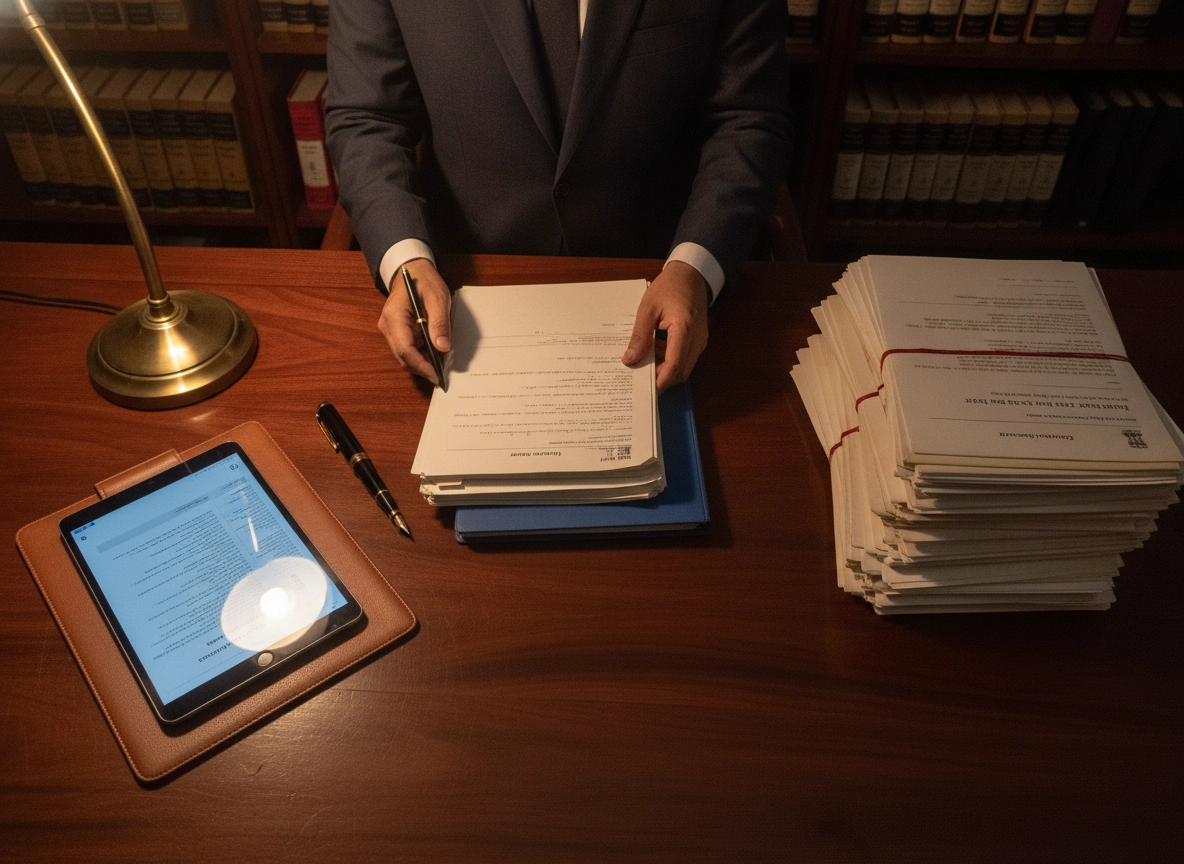
Imagine a lead counsel is refining a high-stakes constitutional argument on a Friday afternoon. Suddenly, a client calls because a High Court filing was rejected over a minor pagination error. This isn’t just a nuisance; it’s a total drain on the mental bandwidth required for the ‘big picture’ litigation that happens in the highest court.
The cognitive cost of clerical compliance
Specialized advocates often offload the heavy lifting of High Court paperwork to dedicated teams or junior associates. It’s a strategic necessity rather than a lack of interest. A Supreme Court advocate usually focuses on identifying a ‘substantial question of law’,the kind of needle-moving insight that changes how the law is interpreted nationwide.
But the Delhi High Court’s registry has its own set of exhaustive, often rigid, procedural norms. If an advocate spent their entire morning chasing down a registry clerk to fix a ‘defect’ in the filing, they’d lose the focus needed to prep for a complex oral argument. While some solo practitioners try to do it all, the sheer volume of High Court registry objections makes that approach increasingly risky. I’ve seen brilliant cases falter simply because the lead lawyer was too bogged down in the mechanics of the paperwork to see the strategy gaps.
Why delegation protects the client
When clients look at Supreme Court advocate fees in Delhi, they’re often paying for a well-oiled machine. This machine ensures that while the lead counsel is crafting the legal theory, a specialized team is managing the affidavits, annexures, and local bar requirements.
It’s about ensuring the highest level of legal representation in Delhi by letting each person do what they do best. A specialist’s time is best spent on the nuances of the law, not on the margins of a petition. And honestly, the risk of a procedural dismissal is just too high to treat High Court filing as a side task. It’s a full-time discipline in its own right.
Q: Does your lawyer need to be an AOR to argue your case in Delhi?
The split between acting and pleading
Think of the legal process as a theater production. You have the stage manager who handles the logistics (acting and filing) and the lead actor who delivers the lines (pleading). In the Supreme Court, the stage manager must be an Advocate on Record. But does that rule follow you across the street to the High Court?
The short answer is no. The Delhi High Court jurisdiction doesn’t operate under the AOR system. While the Supreme Court mandates that only an AOR can sign a Vakalatnama or file a petition, the High Court allows any advocate enrolled with a State Bar Council to both file and argue. But don’t let that simplicity fool you. Even if a Supreme Court civil lawyer Delhi can technically stand up and speak, the administrative “acting” part is still governed by specific High Court rules under Section 34 of the Advocates Act.
I’ve often seen litigants assume that because their lawyer is a powerhouse in the Supreme Court, they’ll navigate the High Court registry with ease. That’s a risky bet. The High Court has its own rhythm for filing, curing defects, and listing matters. While you don’t need to meet specific Advocate on Record requirements to argue your case in Delhi, you definitely need a team that understands the local procedural friction.
It’s about the distinction between the right to practice and the right to appear. Most senior practitioners, like those at the office of Shashi Kiran, maintain a footprint in both courts precisely because the strategies for a Special Leave Petition (SLP) differ so wildly from a writ petition in the High Court. So, can your lawyer argue? Yes. But should they do it without local procedural support? Probably not. The law is rarely just about the argument; it’s about ensuring the papers actually reach the judge’s desk without getting stuck in the registry’s objections pile.
Key takeaways: balancing expertise and procedural compliance

Choosing a team that bridges the gap
Hiring a legal team isn’t just about finding the loudest voice in the courtroom. It’s about ensuring your paperwork actually makes it past the registry. I’ve noticed that litigants often focus solely on the “big name” arguing the case. They forget that a technical error in the legal filing procedure can end a matter before a judge even sees it. The registry is a wall. It doesn’t care about your lawyer’s reputation if the margins are wrong or the signatures are missing.
The Delhi High Court operates on its own set of rules, distinct from the Supreme Court’s AOR-heavy environment. If you’re moving between these tiers, your strategy must change. In the High Court, you need someone who understands the granular local rules. In the Supreme Court, you need an AOR who understands constitutional thresholds. But many lawyers try to bridge this gap without the right support. That is where mistakes happen.
The reality of administrative overhead
Many people get sticker shock when discussing Supreme Court advocate fees Delhi. But you aren’t just paying for an hour of talking. You’re paying for a system that prevents procedural disasters. A seasoned Delhi High Court lawyer knows that delegating the filing to a specialized team isn’t laziness , it’s risk management.
Shashi Kiran’s 35 years in practice have shown that the best results come from this balance. You want an advocate who can pivot from the evidence-heavy demands of the High Court to the high-level legal questions of the Supreme Court.
Don’t be afraid to ask your lawyer how their back-office handles the registry. If they claim to do every single step themselves without a dedicated filing team, it’s a red flag. Your priority is getting your day in court. That starts with a flawlessly filed petition. Ask about their team structure before you sign the Vakalatnama.
If you’re unsure about your legal representation, Shashi Kiran Advocate provides the clarity you need to navigate both High Court and Supreme Court matters effectively.
Frequently Asked Questions
Why can’t my Supreme Court lawyer just handle everything in the Delhi High Court?
It’s because the two courts run on different rulebooks. The Supreme Court uses a strict Advocate on Record (AOR) system that doesn’t exist in the Delhi High Court, meaning the administrative requirements for filing are completely different.
Does my lawyer need to be an AOR to argue a case in Delhi?
Not necessarily. While an AOR is mandatory for filing and acting in the Supreme Court, the Delhi High Court follows different norms. You’ll find that many lawyers focus on either the appellate side or the trial side, and it’s common to have a team handle the procedural work while your lead counsel focuses on the arguments.
What exactly does an Advocate on Record do differently?
An AOR is the only person authorized to file papers or sign a Vakalatnama in the Supreme Court. They take formal responsibility for the case before the apex court, which is a specialized role that goes beyond just arguing in front of the judges.
Is it worth hiring a separate team for High Court filings?
Honestly, it’s often the smartest move for efficiency. If your lawyer spends their time navigating local registry quirks instead of building your legal strategy, you’re not getting the best value for your case.
