

The trap of the ‘third appeal’ mindset

Imagine standing before a bench that dismisses 96% of its cases within the first few minutes. It’s a brutal reality check. The biggest mistake I’ve seen in my years of practice is the ‘third appeal’ mindset. Litigants often think they can just repeat the same arguments that failed in the High Court, hoping a new judge will finally believe them. That’s not how this works.
The Supreme Court isn’t a trial court. It’s a constitutional filter. Its main job under Article 136 isn’t to correct every tiny error, but to resolve substantial questions of law that affect the whole country. If you’re still arguing about which witness was lying or where a boundary wall sits, you’ve already lost. You have to prove jurisdictional lapses or ‘perversity’—where the lower court’s logic is so broken it’s actually shocking.
This shift is exactly which legal expertise handles the shift from Delhi High Court to a Supreme Court SLP. You need a strategy that stops telling a story and starts dissecting the law. At Shashi Kiran’s office, we make it clear: you aren’t just filing a complaint. You’re asking for special leave. It’s a privilege. Even a technically sound petition faces a massive challenge because the court is simply buried in cases.
The procedural hurdles are just as steep. People always ask: do you actually need an Advocate-on-Record for your Supreme Court filing? The short answer is yes. It’s mandatory. If you don’t follow the Special Leave Petition procedure to the letter, the registry will reject your case before a judge even looks at it. Your grounds for filing an SLP must be sharp, technical, and hit hard right away.
Why High Court victories (or losses) don’t translate to Supreme Court success
Winning a hard-fought battle in the High Court feels like the ultimate vindication. But that victory is often fragile. Many litigants assume that if they won on facts in the lower courts, the Supreme Court will naturally agree. This is a dangerous assumption. The Supreme Court isn’t a ‘third court of facts.’ It doesn’t care about re-evaluating witness testimonies or checking if a piece of evidence was given slightly too much weight.
The shift from facts to law
In a High Court, your strategy likely revolved around ‘factual appreciation’,proving what happened and who was responsible. But at the apex level, the game changes entirely. The court acts as a gatekeeper. If your petition focuses on re-arguing the merits of the case rather than identifying a ‘substantial question of law’ or a jurisdictional error, it will likely join the 96% of Special Leave Petitions (SLPs) that get dismissed at the admission stage. This is precisely what happens when your Delhi High Court strategy hits a Supreme Court wall; the arguments that worked yesterday suddenly carry zero weight.
The necessity of specialized advocacy
High Court lawyers are often masters of trial strategy and cross-examination. However, the Supreme Court requires a ‘brief-first’ approach. You have perhaps five to ten minutes to convince a bench to even hear your case. If your counsel spends that time discussing the nuances of a local property dispute instead of a constitutional error, the case is over before it begins. This is why hiring supreme court advocate expertise is often the only way to navigate this transition.
Beyond strategy, there is the procedural reality of the Advocate-on-Record (AOR) system. Your trusted local lawyer simply doesn’t have a Supreme Court right of audience to file documents or act as the primary representative. At firms like Shashi Kiran Advocate, the focus is on bridging this gap,taking a High Court record and distilling it into the precise, law-heavy language the apex court demands. A fresh legal team doesn’t mean your previous lawyer was wrong; it means the arena has changed, and you need a different set of weapons to survive it.
Assembling the right squad: AORs and senior advocates
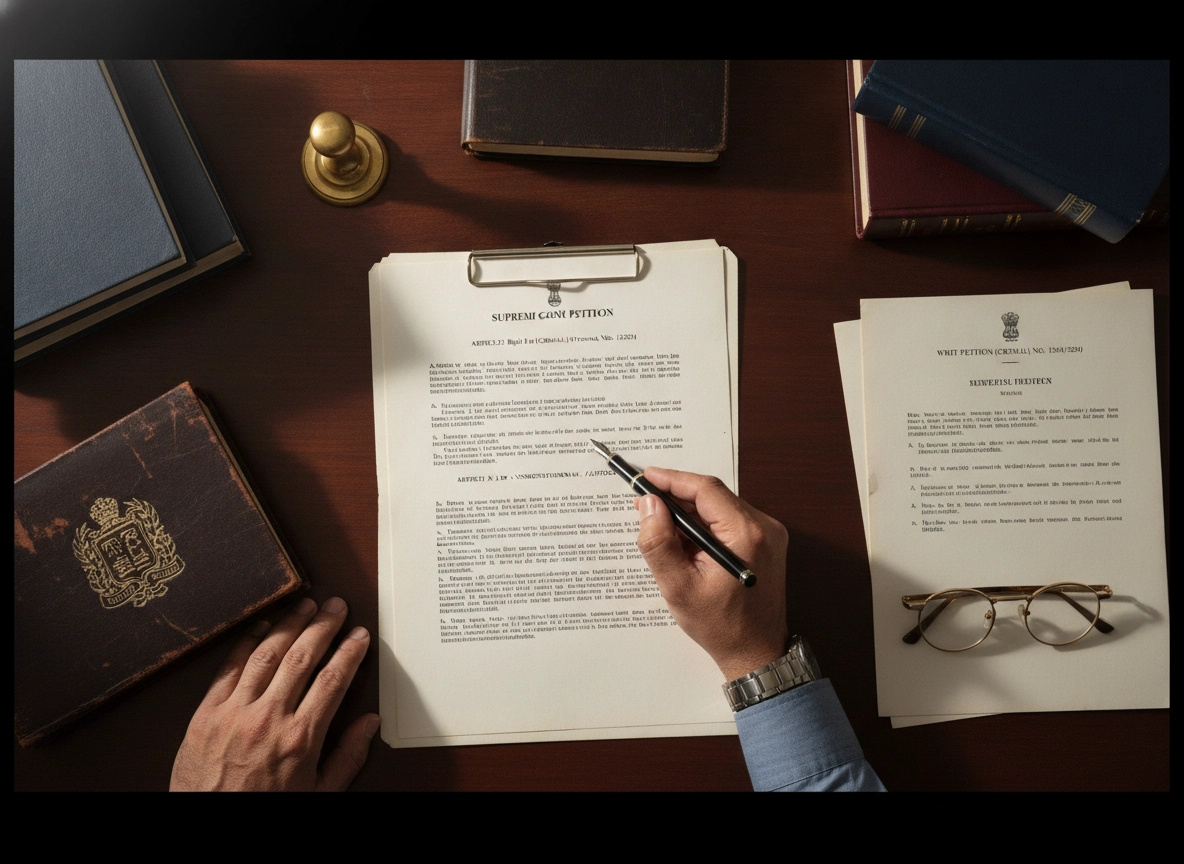
Moving from a High Court to the Supreme Court isn’t just a step up in prestige. It’s a hard pivot into a different regulatory environment. You can’t just drag your trial team into the apex court and expect the registry to take your papers. It’s not a suggestion; it’s the law. The Supreme Court uses a bifurcated system that splits the work between those who file the case and those who argue it.
The advocate-on-record: your mandatory gateway
The Advocate-on-Record (AOR) is the center of this universe. They’re the only legal gateway the court recognizes. Under the Supreme Court Rules, nobody files a Vakalatnama or acts for a party unless they’re an AOR. It’s not a title you just pick up. To become an Advocate on Record India, a lawyer needs four years of practice, a year of training under a senior AOR, and a pass on a brutal exam. Plus, they’ve got to keep an office within 16 kilometers of the court.
Handling SLP filing requirements is the AOR’s main job. They stop your petition from getting tossed on a technicality before a judge even reads the first page. But it’s more than just filling out forms. A veteran AOR reads the room—or rather, the bench. They know how to draft grounds that fit the court’s gatekeeping logic. I’ve watched solid cases die because the drafting didn’t use the right ‘dialect’ for the Supreme Court.
The senior advocate: the voice of the petition
While the AOR builds the foundation, a Supreme Court Senior Advocate usually takes the mic. In this court, you might get 60 seconds to make your point during an admission hearing. That’s it. You need a specialist who can compress a massive record into two minutes of clear, sharp persuasion.
Can you keep your Delhi High Court lawyer? Sure. Often, you should. They know the case’s history. But the Supreme Court advocate has to lead. The Supreme Court lawyer fees cover this two-tier defense. Don’t assume a famous Delhi High Court lawyer can handle the procedural mess alone. They can’t.
You’ve got to find the right Supreme Court advocate in Delhi who gets the mechanics of expert Special Leave Petition filing. Figuring out how to find a top Supreme Court advocate in Delhi isn’t about scrolling through a directory. It’s about building a team where the AOR and the arguing counsel are in sync. Your current lawyer doesn’t get fired, but they move to the back seat as a factual resource while the specialists drive.
Tools for a modern SLP strategy
96% of Special Leave Petitions fail at the admission stage. That’s the reality. Most litigants rush into the apex court fueled by emotion and ignore the cold calculation of whether a “substantial question of law” actually exists.
Modern tools for SLP merit assessment
You don’t have to guess. Platforms like VakeelSaab or internal merit-audit frameworks help you how to find the right supreme court advocate in delhi for your needs because they filter for actual performance data. It’s a shift away from the old trial-and-error method of hiring a supreme court lawyer. While these tools provide a solid starting point, they won’t replace the subtle judgement of a seasoned professional.
It isn’t just about finding a name. Your legal representation in New Delhi must understand the procedural stakes. The real danger is the opportunity cost. While slp filing fees in the supreme court start at a modest INR 1,500, the damage from a dismissal is usually permanent.
You need to know when to file an slp and when to accept the lower court’s word. Shashi Kiran Advocate argues that a supreme court advocate should act as a filter instead of a mouthpiece. This approach keeps your case from becoming another dismissal statistic and gives it the weight needed to catch the bench’s attention.
The Supreme Court protects its time. Use digital repositories to check an Advocate-on-Record’s (AOR) track record in property or service matters. It can save you months. Legal transparency is finally catching up. Don’t fall into the trap of hiring someone just because their office is nearby.
Fatal errors that kill a petition before it’s even heard

Imagine a litigant who has spent years fighting a property dispute, finally loses at the High Court, and spends two months “gathering more evidence” before reaching out to a criminal lawyer Delhi Supreme Court or a specialist in civil SLPs. By the time the paperwork is ready, the 90-day limitation period has expired. In the eyes of the apex court, your “new evidence” usually doesn’t matter if you can’t justify every single day of that delay. It’s a brutal reality: most petitions die on the vine due to avoidable procedural lapses.
The trap of the 90-day clock
The most common fatal error isn’t a lack of merit; it’s a lack of punctuality. While the court has the power to condone delays, it rarely does so for “oversight” or “searching for a better lawyer.” You need a lawyer for Special Leave Petition (SLP) in Supreme Court who understands that the clock starts ticking the moment the High Court judgment is signed, not when you receive the certified copy. I’ve seen countless cases where a delay of just four or five days led to an immediate dismissal without the judges even looking at the legal arguments.
Drafting for the gatekeepers
Another pitfall is the “copy-paste” syndrome. Many lawyers simply take their High Court arguments and re-package them. This is a mistake. The Supreme Court isn’t interested in re-evaluating whether Witness A was lying; they want to know if the High Court applied the law incorrectly. If your petition doesn’t frame a “substantial question of law,” it will likely be part of the 96% that get dismissed at the admission stage.
I’ve noticed that many litigants struggle to understand that the Special Leave Petition procedure is entirely different from a standard appeal. It requires a “brief-first” advocacy style where the written word carries more weight than the oral argument. Working with an experienced professional like Advocate Shashi Kiran ensures that these technicalities,from the Advocate-on-Record’s office radius to the specific formatting of the list of dates,are handled with the precision the court demands. It’s often better to have a different legal mind for your Supreme Court case than the one who handled the trial, simply because the skill set required is so distinct. You aren’t just filing a paper; you’re trying to pass a very narrow gate.
Is it time to pivot to a fresh legal eye?
You’ve likely spent months, maybe years, in the High Court trenches with your current lawyer. They know every nuance of your file. But here’s the hard truth: the Supreme Court isn’t just a bigger version of the High Court. It’s a different game entirely. If your current team is still talking about re-examining witness testimonies or questioning factual findings, that’s a red flag. It might be time to consider if loyalty is outweighing your chances of success.
Assessing your current team’s readiness
The Supreme Court thrives on “substantial questions of law,” not emotional appeals about fairness. When you’re considering hiring a supreme court lawyer, you need to ask yourself if your current counsel can make that mental shift. Do they understand the specific Supreme Court vs High Court legal strategy required to survive the 96% dismissal rate? It’s a common mistake to assume that a great trial lawyer is a great appellate lawyer. The skills required to cross-examine a witness are worlds apart from the skills needed to dissect a High Court’s legal reasoning in seven minutes of oral arguments.
Here is a quick diagnostic to see if you need a fresh perspective:
- AOR Status: Does your team include a registered Advocate on Record India who handles the procedural vetting?
- Strategy Pivot: Can they identify a “perversity” in the judgment,where the conclusion is so flawed no reasonable person could reach it,or are they just repeating arguments that already failed?
- Niche Expertise: Does the matter involve specific areas like service law or property where the Apex Court has recently shifted its stance?
I’ve seen countless petitions fail because the drafting felt like a “copy-paste” of the High Court appeal. It’s often better to bring in someone like Shashi Kiran, who brings over 35 years of experience as an Advocate-on-Record, to provide that objective review. Sometimes, a fresh pair of eyes sees a legal loophole that the original team, being too close to the facts, completely missed. While it isn’t a guarantee of success, it ensures your case is framed for the judges, not the files.
Final verdict: the 90-day clock is ticking

The clock doesn’t pause while you deliberate on whether to keep your old legal team or pivot to a specialist. In the world of Article 136, 90 days is a heartbeat. If you miss that window, you aren’t just late; you’re likely barred from the apex court forever unless you can prove an extraordinary reason for the delay. And let’s be honest: the court rarely accepts administrative oversight as a valid excuse.
The Special Leave Petition procedure is notoriously unforgiving. It isn’t a playground for generalists. Success here demands an acute understanding of how to frame the grounds for filing SLP around questions of law rather than just re-hashing grievances about facts. I’ve seen countless cases fall apart because the petition looked like a carbon copy of the High Court appeal. That is a recipe for a 96% dismissal rate.
When the stakes reach this level, you need a Supreme Court Senior Advocate who understands the specific temperament of the bench. Someone like Shashi Kiran, with over 35 years in the trenches, knows that the first 60 seconds of oral argument are often where the case is won or lost. But don’t wait for day 85 to make your move.
A rushed petition is a weak petition. The drafting process requires time to distill thousands of pages of trial records into a sharp, constitutional argument. If you’re serious about challenging a lower court’s “perversity,” start the transition now. Your right to be heard is only as strong as the team you put behind it.
If you’re worried about your 90-day deadline, Advocate provides the specialized Supreme Court expertise you need to avoid common filing pitfalls. Reach out today for a consultation at +91-92121-97427.
Frequently Asked Questions
Can my regular High Court lawyer file my Supreme Court SLP?
Technically, no. Only an Advocate-on-Record (AOR) who has passed the Supreme Court’s specific exam is authorized to file documents there. While your lawyer can assist, you’ll need an AOR to handle the formal filing requirements.
Why are so many SLPs dismissed at the admission stage?
Most of them fail because they try to re-argue facts from the lower court. The Supreme Court isn’t a third trial court; it only cares about substantial questions of law or major jurisdictional errors.
How much time do I have to file an SLP?
You generally have 90 days from the date of the High Court judgment. It’s best to start the process early because drafting a petition that actually catches the court’s attention takes time.
Is it worth getting a fresh legal opinion for my SLP?
Honestly, it’s often a smart move. A lawyer who knows the Supreme Court’s specific ‘brief-first’ style can spot legal errors that a trial-focused attorney might miss.