

The high court victory hangover
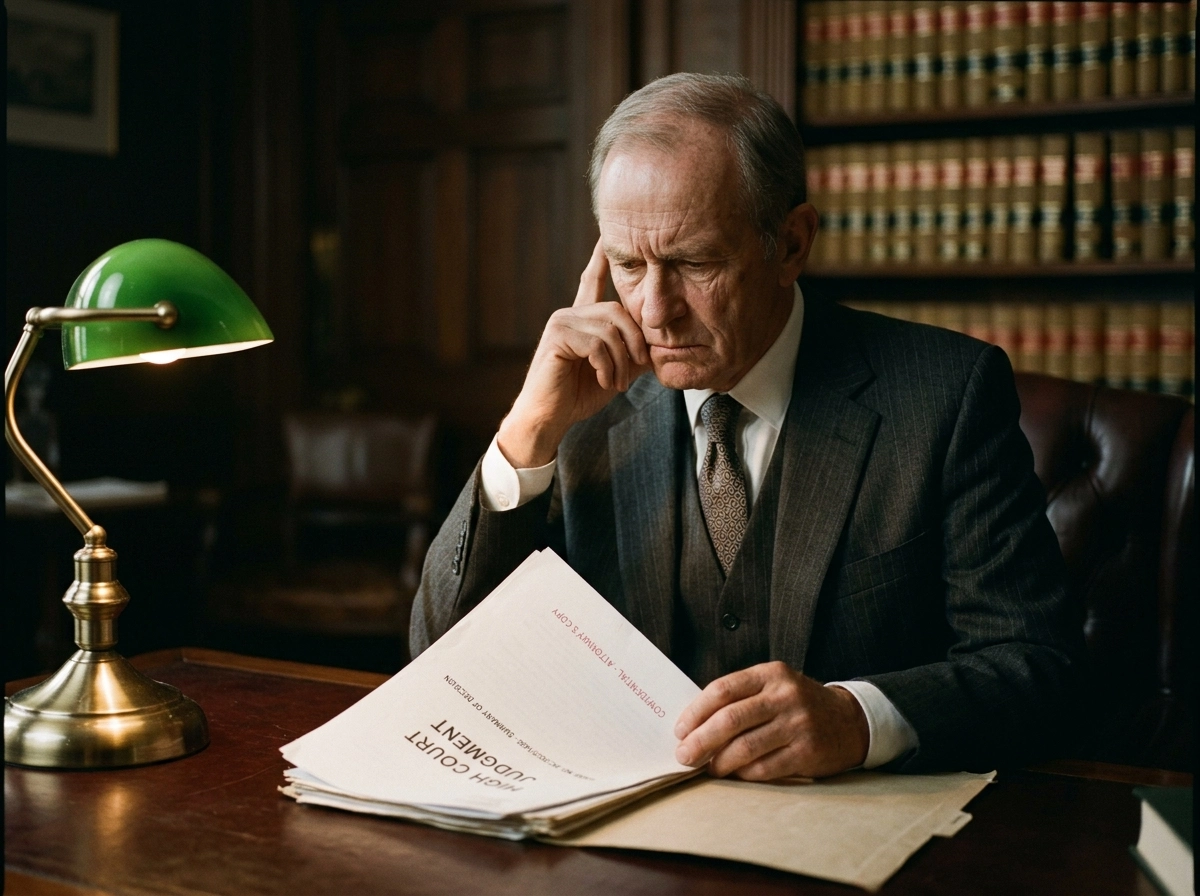
Imagine a client walking into my office clutching a 50-page judgment from the Delhi High Court. They’ve won. The judge agreed that the witnesses were credible and the evidence was clear. Now, the opponent has filed a Special Leave Petition (SLP), and the client is confident. “Let them go to the Supreme Court,” they say. “The facts are on our side.” I usually have to break the news that, in the apex court, facts are often the least important thing in the room.
the danger of factual overconfidence
That sense of security is what I call the high court victory hangover. It’s a dangerous state of mind where litigants, and sometimes even seasoned high court lawyers delhi, assume a winning factual narrative is bulletproof. But the Supreme Court isn’t a “super-appellate” court designed to fix every minor factual error. Why the best Delhi High Court lawyers can’t always win in the Supreme Court often boils down to a refusal to pivot from evidence to legal interpretation.
The reality is that approximately 96% of SLPs are dismissed at the admission stage. If you walk into Tilak Marg still arguing about whether a witness was lying, you’ve likely already lost. You need a complete legal strategy transition that shifts focus from the “what” to the “why it matters to the nation.” This shift from Delhi High Court to a Supreme Court SLP is less of a promotion,and more of a total reinvention.
shifting from evidence to law
While a Delhi High Court lawyer excels at navigating messy trial records, the Supreme Court acts as a constitutional gatekeeper. It’s looking for substantial questions of law. Honestly, I’ve seen brilliant factual cases fall apart because the counsel couldn’t stop talking about the evidence. It’s why you often need a different legal mind for your Delhi High Court case vs the Supreme Court.
Winning at the High Court is a feat, but it can also be a trap. It lulls you into thinking the same arguments will work twice. They won’t. Understanding the delhi high court to supreme court appeal procedure means accepting that your victory might be fragile. Before worrying about legal costs when moving from Delhi High Court to the Supreme Court, find a sharp Supreme Court advocate in Delhi who can provide the high-caliber legal representation from a Delhi Supreme Court advocate needed to survive the admission stage.
Why the Supreme Court isn’t a court of facts
The transition from the Delhi High Court to the Supreme Court isn’t just a move across Tilak Marg; it’s a fundamental shift in what the judges care about. While you’re used to arguing about who said what and which document was signed when, the Supreme Court rarely has the appetite for those messy details. High Court practice is often fact-heavy, focusing on evidence and witness credibility. In contrast, the apex court functions as a constitutional gatekeeper.
Under Article 226, the High Court exercises broad writ jurisdiction. It acts as a court of record that can correct almost any injustice, whether it’s a factual error or a procedural slip-up. But once you move toward a Special Leave Petition procedure, the rules change completely. Article 136 is not a matter of right. It’s a discretionary power that the Court uses sparingly. I’ve seen many litigants walk into the building expecting a second appeal, only to be disappointed when their case is dismissed in minutes.
The statistics are sobering: approximately 96% of SLPs are dismissed at the admission stage. Why? Because they focus on what happened instead of why it matters to the nation. This is exactly why High Court arguments fail when they aren’t properly recalibrated. If you’re evaluating legal representation delhi high court vs supreme court, you have to understand that the higher bench doesn’t re-examine evidence unless there’s a gross miscarriage of justice,a threshold that is incredibly high and rarely met.
Instead, the Court looks for substantial questions of law. It wants to know if the lower court’s finding overlooks a settled interpretation of a statute or violates a constitutional principle. Getting the right advocate in supreme court new delhi means finding someone who can strip away the narrative fluff. They shouldn’t just repeat your previous victory; they need to frame it as a national priority. Shashi Kiran Advocate, with over 35 years of experience, understands this surgical precision.
Timing is another silent killer. You have a strict 90-day window from the High Court judgment to file. Missing this because you were busy wrestling with Delhi High Court filing rules instead of preparing for the SC registry’s scrutiny is a common tragedy. Understanding the Supreme Court SLP process requires moving away from individual disputes toward disciplined, precedent-focused drafting. The apex court isn’t there to fix every mistake,it’s there to settle the law.
How to pivot from storytelling to legal surgery

Mastering the pivot to legal surgery
So, how do you stop telling a story and start performing surgery? It starts with a cold, hard look at your grounds for appeal. In the High Court, you probably focused on the ‘who, what, and when’ to show you were wronged. But at the top level, those details are just noise. You need to find the specific legal nerve the lower court pinched.
I’ve seen many people struggle here because they can’t let go of their facts. They want to argue about a missing document or a witness who lied. But the Supreme Court SLP process isn’t there to fix every little mistake. Article 136 is a discretionary power. It’s for issues that change how law works for everyone. That’s why even a solid Delhi High Court case still needs a separate Supreme Court strategy. You have to trade the personal drama for legal principles.
Framing the substantial question
Ask yourself: If the Supreme Court decides this, does it change the law for the whole country? That’s your ‘substantial question of law.’ If it only matters to your bank account, it’s just a factual grievance. If it clears up a messy statute or settles a fight between two different High Courts, you’ve got something.
You need a technician, not a storyteller. Finding a Special Leave Petition (SLP) lawyer in Delhi means finding someone who can strip away the emotion. Lawyers like Shashi Kiran know that the best lawyers in delhi supreme court find the constitutional hook even in a boring property fight or a service matter.
The procedural discipline
Don’t ignore the paperwork. The Registry is brutal. I’ve seen cases die before a judge even looked at them because of a late filing or a missing certified copy. It’s a hard lesson to learn. You have to check: does your current delhi high court lawyer have the right to argue in the supreme court? The skill set for trial work is just different from the strict, disciplined drafting an SLP requires.
In serious cases, like those handled by criminal lawyers in delhi supreme court, there’s no room for mistakes. You don’t get points for trying hard. You get points for being right. This shift in strategy isn’t just about moving up a floor. It’s about changing your entire perspective on what ‘winning’ looks like. You aren’t proving you were right anymore. You’re proving the law was applied so badly that the highest court in the land has to step in. If you’re ready to make that move, let’s talk about making your petition as precise as it needs to be.
Data check: why 96% of SLPs never make it past Monday

96% of Special Leave Petitions (SLPs) die at the admission stage. That is the raw reality. Lawyers call it the “Monday morning massacre,” though Fridays are just as lethal. These “miscellaneous days” are when the Court sifts through new filings. Most petitions get less than two minutes of airtime. If you don’t show a substantial question of law immediately, you’re out.
Why the gatekeepers say no
Why the high failure rate? Litigants often suffer from a “High Court victory hangover.” They treat the Supreme Court SLP process like a standard second appeal. They focus on factual mistakes. But the Supreme Court doesn’t exist to fix every “wrong” judgment. Its job is clarifying the law for the whole country.
Empirical institutional overviews show that discretionary power under Article 136 is the Court’s most used—and most rejected—tool. Many cases fail because the petition is just a copy-paste of High Court arguments. This is where the best lawyers in delhi supreme court make the difference. It isn’t about seniority alone. It’s about finding that specific legal thread that forces the Court to step in.
Shashi Kiran Advocate notes that the difference between a dismissal and a “notice issued” often happens in the first three sentences. If you’re still talking about witness credibility or a misread document, the Bench has already moved on. You have to frame the issue as a systemic failure or a conflict in how the law is being interpreted.
Monday doesn’t care about your personal grievance. It cares about the law’s integrity. If your Advocate-on-Record hasn’t cut through the factual noise, you’re just another statistic in that 96% failure rate. It’s a brutal filter, but it’s how the gatekeepers handle the thousands of petitions hitting their desks.
Are you making these fatal drafting errors?
That 96% dismissal rate I mentioned earlier isn’t just a reflection of the court’s selectivity; it’s a direct indictment of poor drafting. Most Special Leave Petitions (SLPs) are effectively dead on arrival because they look like High Court appeals in disguise.
The most common mistake is the “copy-paste” trap. I’ve seen countless petitions where the grounds are a verbatim repetition of the arguments used before high court lawyers delhi. This is a fundamental misunderstanding of the venue. The Supreme Court doesn’t care if the High Court misread a witness’s tone; it cares if the High Court misapplied a binding precedent. If your draft focuses on “what happened” instead of “where the law broke,” it’s going into the bin.
And then there’s the procedural sloppiness. Missing certified copies or failing to translate vernacular documents might seem like minor administrative hurdles, but the Registry is ruthless. These defects create “corridors of exhaustion” that drain your client’s resources before the case even reaches a bench.
Successful petitioners understand the legal representation differences between lower tiers and the apex level. A trial court manages the messy details, while the Supreme Court demands legal surgery.
A fatal legal strategy transition error is failing to frame the “Question of Law” early. If a judge has to hunt for the legal point in a 50-page narrative, they’ll likely just dismiss it. It’s about precision, not volume. You aren’t there to re-litigate the facts; you’re there to fix a systemic error.
Honestly, most litigants think more pages equal more value. But in the Supreme Court, brevity is your best ally. A ten-page petition with one sharp legal question is far more dangerous than a hundred-page saga that forgets to explain why the national law should care. Don’t let a “High Court victory hangover” cloud the need for a completely new, disciplined approach to drafting.
Preparing for the 120-second admission hearing

After scrubbing your petition of drafting errors, you face the most brutal filter of all: the admission hearing. You’ve likely spent years litigating in the High Court, but here, you often get less than 120 seconds to justify your case’s existence. Why so short? Because the Bench isn’t hunting for the “truth” of your specific dispute; they’re looking for a reason to disturb a final judgment.
This is where selectivity becomes your best defense. You can’t argue twenty points; you must argue the single point that prevents the judge from saying “Dismissed.” It’s a high-stakes performance that requires a seasoned advocate in supreme court new delhi who understands the Bench’s pulse. If a Delhi High Court lawyer tries to re-litigate the entire trial, the door will shut before they finish their first paragraph.
The Supreme Court SLP process rewards brevity and surgical precision. If you aren’t prepared to strip away the emotional fluff and focus on the cold legal core, you’re simply adding to the dismissal statistics. The question isn’t just whether you’re right, but whether your grievance actually changes the law.
If you’re navigating the transition to the apex court, Advocate provides the specialized representation needed to frame your case correctly. Reach out today for a consultation at +91-92121-97427.
Frequently Asked Questions
Can I re-argue the facts of my case in the Supreme Court?
Honestly, you shouldn’t. The Supreme Court isn’t a court of facts; it’s a constitutional gatekeeper that focuses on substantial questions of law. If you just try to re-hash what happened at the High Court, you’re likely to see your petition dismissed.
Why is the Advocate-on-Record so important for my petition?
The AOR is the only person authorized to file matters in the Supreme Court. They’re the gatekeepers who ensure your paperwork meets the court’s rigorous standards, which is why you’ll want one involved early on.
Does my High Court win mean I’ll have an easy time in the Supreme Court?
It’s actually a common trap. Many litigants suffer from a ‘victory hangover’ and assume their previous arguments will hold up, but the Supreme Court requires a completely different, precedent-focused strategy.
What happens if I miss the 90-day filing window?
You’ll face a massive hurdle. The 90-day limit is strict, and failing to meet it usually means your case is dead before it even starts. It’s vital to get your documentation ready well before that deadline hits.


